
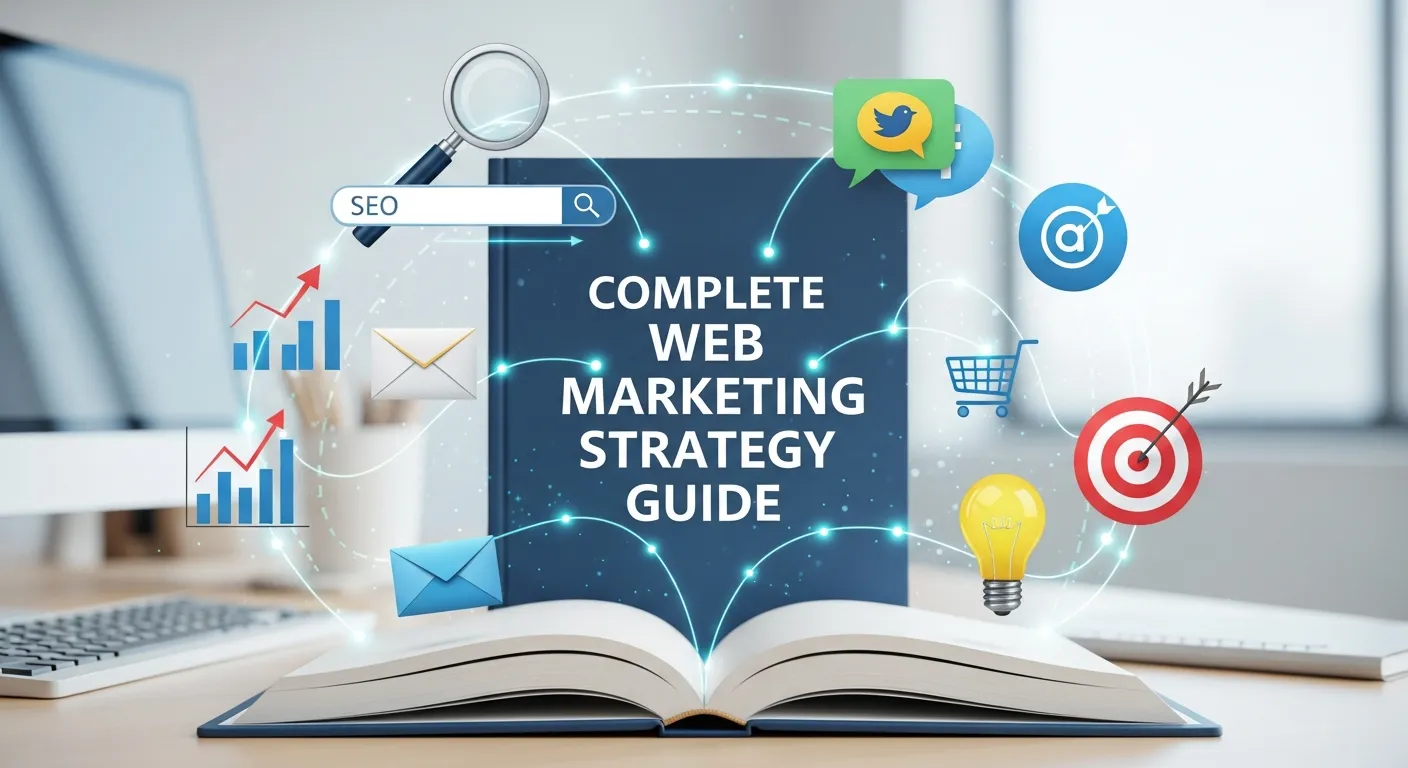
A strong web marketing strategy combines SEO, content, social media, email, and paid ads. By understanding your audience, using data-driven decisions, and adapting to trends like AI and video, businesses can drive sustainable growth and conversions.
The digital landscape shifts constantly. Tactics that brought in thousands of leads five years ago often fall flat now. A robust web marketing strategy is no longer just a nice bonus for businesses; it is an absolute necessity for survival and growth. Without a clear plan, you risk wasting time and money on campaigns that do not reach the right people.
Building a strong online presence requires more than throwing money at ads or posting sporadically on social media. It demands a thoughtful, cohesive approach that connects every touchpoint of your customer’s journey. Good web marketing advice emphasizes that success comes from consistent, data-driven efforts rather than random acts of content creation.
This internet marketing guide provides exactly that. You will learn comprehensive digital marketing strategies for long-term success, covering everything from search engine optimization to emerging tech trends. By mastering these foundational pillars, you can build a marketing engine that consistently drives traffic, generates leads, and boosts revenue. Implement these online marketing tips to stay ahead of the competition and grow your business sustainably.
Understanding Your Audience and Niche

Before you write a single blog post or launch an ad, you need to know exactly who you are talking to. Great website marketing techniques always start with a deep understanding of the end user. If you do not know who you are trying to reach, your messaging will fail to resonate.
Defining Your Target Audience
Broad targeting rarely works. You need to understand your audience on a granular level. Look at demographics like age, location, and income. Then look deeper into psychographics. What are their interests, values, and daily habits? Most importantly, identify their core pain points.
Your marketing should position your product or service as the ultimate solution to their specific problems. Create detailed buyer personas that outline the exact characteristics of your ideal customer. This ensures all your digital marketing strategies remain sharply focused. When you speak directly to someone’s needs, they are far more likely to listen and eventually convert.
Market Research
You cannot stand out if you do not know what your competitors are doing. Conduct thorough market research. Analyze your top competitors to see what channels they use and what messaging resonates with their followers. Look at their website structure, their social media presence, and their email marketing efforts.
Perform a SWOT analysis (Strengths, Weaknesses, Opportunities, Threats) for your own business. This reveals gaps in the market that you can easily fill. Finding these opportunities is one of the most valuable pieces of web marketing advice you can follow.
Crafting Your Unique Selling Proposition (USP)
Your USP is the main reason a customer should choose you over the competition. It needs to be clear, compelling, and instantly understandable. Are you the fastest? The most affordable? The highest quality?
Once defined, your USP should echo across all your web marketing materials. It should be prominently featured on your homepage, woven into your social media bios, and highlighted in your ad copy. Strong website marketing techniques rely on a USP that instantly communicates your value to potential buyers.
Pillar 1: Search Engine Optimization (SEO)

SEO is the practice of improving your website so it ranks higher in search engine results. It remains one of the most reliable ways to generate consistent, high-quality traffic. Any complete internet marketing guide must heavily emphasize the importance of SEO.
On-Page SEO
On-page SEO involves optimizing the content and structure of your website. Start with keyword research to find the terms your audience is actually searching for. Integrate these keywords naturally into your titles, headers, and body text.
Content optimization also means ensuring your writing is highly readable and directly answers the user’s query. Do not stuff keywords unnaturally; instead, focus on providing genuine value. Good digital marketing strategies ensure that every page on your site serves a distinct purpose and targets specific, relevant search queries.
Technical SEO
Technical SEO is just as critical as your written content. Your site must load quickly, function perfectly on mobile devices, and use schema markup to help search engines understand your data. Search engines penalize slow websites because they provide a poor user experience.
Compress your images, utilize browser caching, and ensure your site architecture is logical and easy to navigate. Applying these technical website marketing techniques ensures search engine bots can easily crawl and index your pages.
Off-Page SEO
Search engines view backlinks from other reputable websites as votes of confidence. Build backlinks by guest posting, creating highly shareable content, or reaching out to industry publications. Quality matters far more than quantity when it comes to link building.
If you have a physical location, local SEO is vital. Claim your Google My Business profile and ensure your name, address, and phone number are consistent across local directories. These localized digital marketing strategies help you capture customers actively searching for solutions in your immediate area.
SEO Tools and Analytics
You need data to win at SEO. Tools like Ahrefs, SEMrush, or Moz help you track keyword rankings and spot link-building opportunities. Google Search Console is also essential for monitoring your site’s overall search health.
Regularly check your analytics to see which pages drive the most organic traffic. If a page starts losing its rank, update the content to keep it fresh and relevant. This proactive approach is essential web marketing advice for anyone looking to maintain top search positions.
Pillar 2: Content Marketing
Content is the fuel that powers your web marketing engine. Good content educates, entertains, and builds trust with your audience. Exploring different types of marketing will help you understand how content fits into your broader strategy.
Content Strategy Development
A solid strategy starts with identifying content gaps. Look for questions your audience is asking that your competitors have not answered well. Build an editorial calendar to maintain a consistent publishing schedule.
Consistency shows your audience that you are reliable and authoritative. Outline the topics you plan to cover months in advance. This internet marketing guide recommends aligning your content calendar with seasonal trends, product launches, and major industry events.
Types of Content
Different people prefer different formats. Mix up your output to capture a wider audience. Long-form guides build authority, while short videos grab attention quickly.
Content Formats and Their Uses
|
Content Format |
Best Used For |
Key Benefit |
|---|---|---|
|
Blog Posts |
SEO, Education |
Drives long-term organic traffic |
|
Short-Form Video |
Social Media |
High engagement and rapid brand awareness |
|
Case Studies |
B2B Lead Generation |
Builds intense trust and proves ROI |
|
Infographics |
Complex Data Sharing |
Highly shareable, great for link building |
Content Distribution and Promotion
Creating content is only half the battle. You must distribute it effectively. Share your work across social media, send it to your email list, and repurpose it.
Turn a popular blog post into a short video or a series of social media graphics. Extract key quotes and turn them into Twitter threads. Effective website marketing techniques involve maximizing the mileage of every single piece of content you produce. Do not let your hard work sit unseen on a hidden webpage.
Measuring Content Effectiveness
Track how your content performs to understand what resonates. Look at metrics like page views, time on page, and social shares. If a piece of content generates a lot of leads, analyze why it worked and replicate that success.
Reviewing your data allows you to pivot away from underperforming topics. Sound web marketing advice dictates that you should invest your time and budget into the formats and subjects that yield the highest return on investment.
Pillar 3: Social Media Marketing
Social media allows you to connect directly with your audience, build brand loyalty, and drive traffic to your website. It is an indispensable part of any modern digital marketing strategies.
Choosing the Right Platforms
You do not need to be on every platform. Focus on where your target audience actually spends their time. B2B companies usually thrive on LinkedIn, where professional networking is expected.
Lifestyle brands, on the other hand, often see better results on highly visual platforms like Instagram or TikTok. Spreading yourself too thin across ten different platforms usually results in mediocre content across the board. Pick two or three platforms and master them completely.
Crafting Engaging Content
Social media moves fast. Your content needs to stop the scroll immediately. Use high-quality visuals, compelling hooks, and clear calls to action.
Video content, especially short-form video, currently dominates engagement metrics across almost all platforms. Provide valuable online marketing tips in quick, digestible formats. Authenticity often performs better than highly polished, corporate-looking advertisements. Show the human side of your business to foster a real connection.
Community Management and Engagement
Social media is a two-way conversation. Reply to comments, answer direct messages, and participate in relevant industry discussions. Do not treat your social profiles as a one-way broadcasting tool.
Building a genuine community fosters deep brand loyalty. Ask your followers questions, run polls, and encourage user-generated content. Active community management remains one of the most effective website marketing techniques for retaining customers.
Paid Social Media Advertising
Organic reach has declined significantly over the years. Paid social ads help you target specific demographics with incredible precision. You can target users by age, interests, job title, and even recent purchasing behavior.
Start with a small budget, test different ad creatives, and scale up the winners. This scientific approach prevents you from burning through your budget on ads that do not convert. Integrating paid social is essential web marketing advice for scaling quickly.
Pillar 4: Email Marketing
Email marketing remains one of the most profitable web marketing channels. You own your email list, shielding you from sudden algorithm changes that plague social media platforms.
Building an Email List
Give people a compelling reason to subscribe. Offer a lead magnet, such as a free e-book, a discount code, or access to an exclusive webinar.
Place prominent sign-up forms on your website and dedicated landing pages. Make sure the value proposition of joining your list is obvious. The best digital marketing strategies treat an email list as a primary business asset.
Email Campaign Types
Keep your audience engaged with a variety of emails. Send regular newsletters packed with helpful industry insights and online marketing tips.
Use promotional emails strategically to announce sales or new product launches. Set up automated drip campaigns to nurture new leads over time. For example, a welcome sequence can introduce your brand story over five days, gradually moving the subscriber closer to a purchase.
Personalization and Segmentation
Do not send the exact same email to everyone on your list. Segment your subscribers based on user behavior, past purchases, or geographic location.
Personalized emails see drastically higher open and click rates. If a customer only buys shoes from your store, send them emails about new shoe arrivals, not hats. This level of detail is a core component of advanced website marketing techniques.
Email Marketing Best Practices
Your subject line dictates whether an email gets opened. Keep it catchy, relevant, and free of spammy buzzwords. Inside the email, ensure your calls to action (CTAs) are bold and clear.
Regularly clean your list to maintain high deliverability rates. Remove inactive subscribers who haven’t opened an email in six months. Following this internet marketing guide ensures your emails actually land in the primary inbox, not the spam folder.
Pillar 5: Paid Advertising (PPC)
Pay-per-click (PPC) advertising places your brand directly in front of people who are actively looking to buy right now.
Google Ads
Google Ads captures high-intent traffic better than almost any other channel. Search ads appear when people type specific keywords into Google, meaning they are already looking for a solution.
Display ads show up on partner websites, helping build broader brand awareness. Shopping ads are excellent for e-commerce brands wanting to show product images and prices directly in the search results. Implementing Google Ads correctly is vital web marketing advice for immediate lead generation.
Social Media Ads
Platforms like Facebook, Instagram, and LinkedIn offer robust advertising networks. They allow you to target users based on extremely specific interests, life events, and behaviors.
You can retarget people who visited your website but did not make a purchase. Retargeting is incredibly powerful because the user already recognizes your brand, making them much more likely to convert on the second or third interaction.
Ad Copy and Visual Best Practices
Your ad copy must be concise and highly persuasive. Highlight the direct benefits of your product, not just the technical features. How does your product make the user’s life better or easier?
Pair this strong copy with striking visuals that align perfectly with your brand identity. A cohesive aesthetic ensures that users immediately recognize your ads. Strong creatives form the backbone of successful digital marketing strategies.
Landing Page Optimization
Never send paid traffic to your generic homepage. Send them to a dedicated landing page designed specifically for that ad campaign.
Keep the page layout clean, remove distracting navigation menus, and make the CTA impossible to miss. The messaging on the landing page must exactly match the promise made in the ad. These targeted website marketing techniques drastically improve your conversion rates and lower your acquisition costs.
Analytics and Measurement

Marketing without data is just guessing. You must track your performance comprehensively to understand what actually works and what wastes money.
Key Performance Indicators (KPIs)
Determine which metrics actually matter to your business goals. Common web marketing KPIs include overall website traffic, conversion rate, customer acquisition cost (CAC), and customer lifetime value (LTV).
Tracking vanity metrics like follower counts will not help you pay the bills. Focus on the numbers that directly impact your bottom line. Solid online marketing tips always revolve around measuring tangible ROI.
Google Analytics 4 (GA4)
GA4 provides deep insights into how users interact with your website. Set it up correctly to track user journeys across different devices.
Use the reporting features to see exactly which marketing channels drive the highest quality traffic. If organic search brings in visitors who buy, but social media visitors bounce immediately, you know where to allocate your resources.
Conversion Tracking and Attribution Models
Set up proper conversion tracking to know exactly when a user fills out a lead form or makes a purchase.
Attribution models help you understand which touchpoints deserve credit for the final sale. Customers often interact with multiple channels—like clicking an ad, then reading a blog, then opening an email—before finally buying. Advanced digital marketing strategies rely on accurate attribution to scale effectively.
Emerging Trends in Web Marketing
To stay ahead of the curve, you must keep a close eye on where the industry is heading. Following the latest internet marketing guide ensures you do not get left behind.
AI and Machine Learning
Artificial intelligence is completely transforming how we approach marketing. AI tools can help generate content ideas, optimize ad bidding, and personalize website experiences in real time.
Using AI to analyze large datasets helps you uncover consumer trends much faster than manual analysis. Adopting AI is perhaps the most timely web marketing advice available today.
Voice Search Optimization
More people are using voice assistants like Siri, Alexa, and Google Assistant. Optimize for voice search by targeting long-tail, conversational keywords.
Structure your content in a question-and-answer format, as voice searches are usually phrased as direct questions. These subtle website marketing techniques give you an edge in an increasingly screenless search environment.
Video Marketing Dominance
Video continues to consume a massive share of internet bandwidth globally. Incorporate video deeply into your strategy, whether through detailed YouTube tutorials, live streams, or short-form social content.
Consumers prefer video because it is engaging and easy to digest. If you want effective digital marketing strategies, you must become comfortable producing high-quality video content regularly.
Keep Adapting to Win
A successful web marketing strategy requires a careful blend of SEO, content creation, social media engagement, targeted emails, and smart advertising. By laying out clear goals and measuring your progress, you can build a sustainable pipeline of traffic and customers.
The digital marketing landscape will never stop changing. The most successful marketers are the ones who stay constantly curious. Keep learning, keep testing new ideas, and never be afraid to adapt your strategy when the data tells you to. Start implementing these proven website marketing techniques today, monitor your data closely, and watch your online presence grow significantly over time.
Frequently Asked Questions
What is the most important part of web marketing advice?
The most crucial advice is to thoroughly understand your target audience before launching any campaigns. Knowing their pain points allows you to create messaging that resonates deeply and drives real conversions.
How long does it take for SEO digital marketing strategies to work?
SEO is a long-term game that typically takes three to six months to show significant results. Consistent effort in creating quality content and building backlinks is required to achieve and maintain top rankings.
What are the best online marketing tips for small budgets?
Focus heavily on organic channels like SEO and consistent content creation. Build an email list early, as it provides a direct, free line of communication to your most engaged prospects.
How do I measure the success of website marketing techniques?
Set clear KPIs such as conversion rates, cost per acquisition, and overall return on ad spend. Use tools like Google Analytics 4 to track user behavior and ensure your efforts are directly impacting revenue.
How do I build a comprehensive marketing plan?
Start by researching competitors, defining your USP, and selecting the most relevant channels for your audience. For a deeper dive, explore digital marketing strategy solutions to structure your approach effectively.
Why is an internet marketing guide important for my business?
A structured guide prevents you from wasting resources on random, disconnected tactics. It provides a cohesive roadmap that aligns all your channels to work together toward a unified business goal.
Should I use paid ads or focus purely on organic traffic?
The best approach usually combines both methods. Paid ads generate immediate traffic and leads, while organic efforts like SEO build a sustainable, long-term foundation for your brand.
How often should I send emails to my subscriber list?
Consistency is key, but avoid overwhelming your audience. Sending one valuable, well-crafted newsletter per week is a great starting point for most businesses without causing high unsubscribe rates.
What makes content highly shareable on social media?
Content that evokes strong emotion, provides unique data, or offers an incredibly practical solution tends to get shared. Visually appealing formats like infographics and short videos also boost shareability.
Is voice search optimization really that necessary?
Yes, as more consumers use smart speakers and mobile assistants, voice search is growing rapidly. Optimizing for conversational, question-based queries ensures you capture this expanding segment of search traffic.