
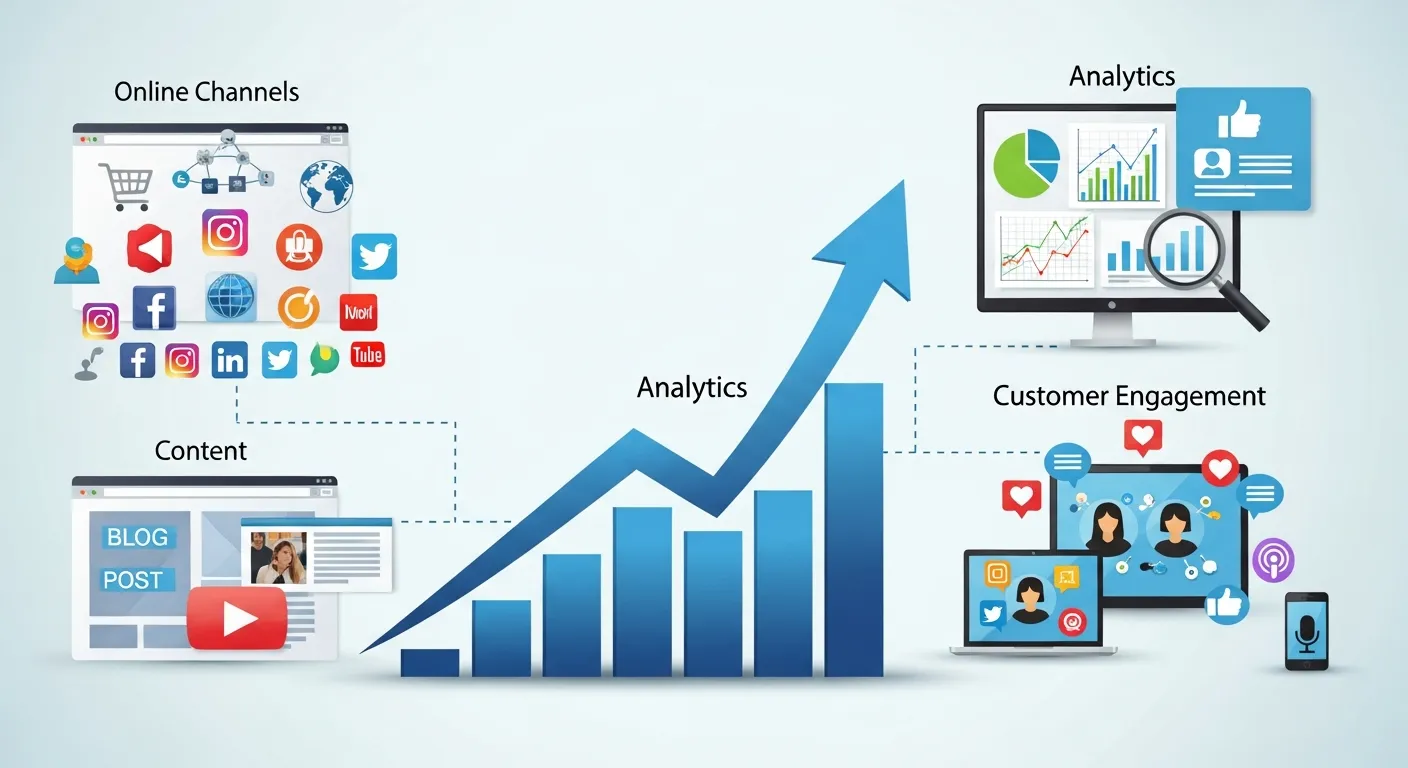
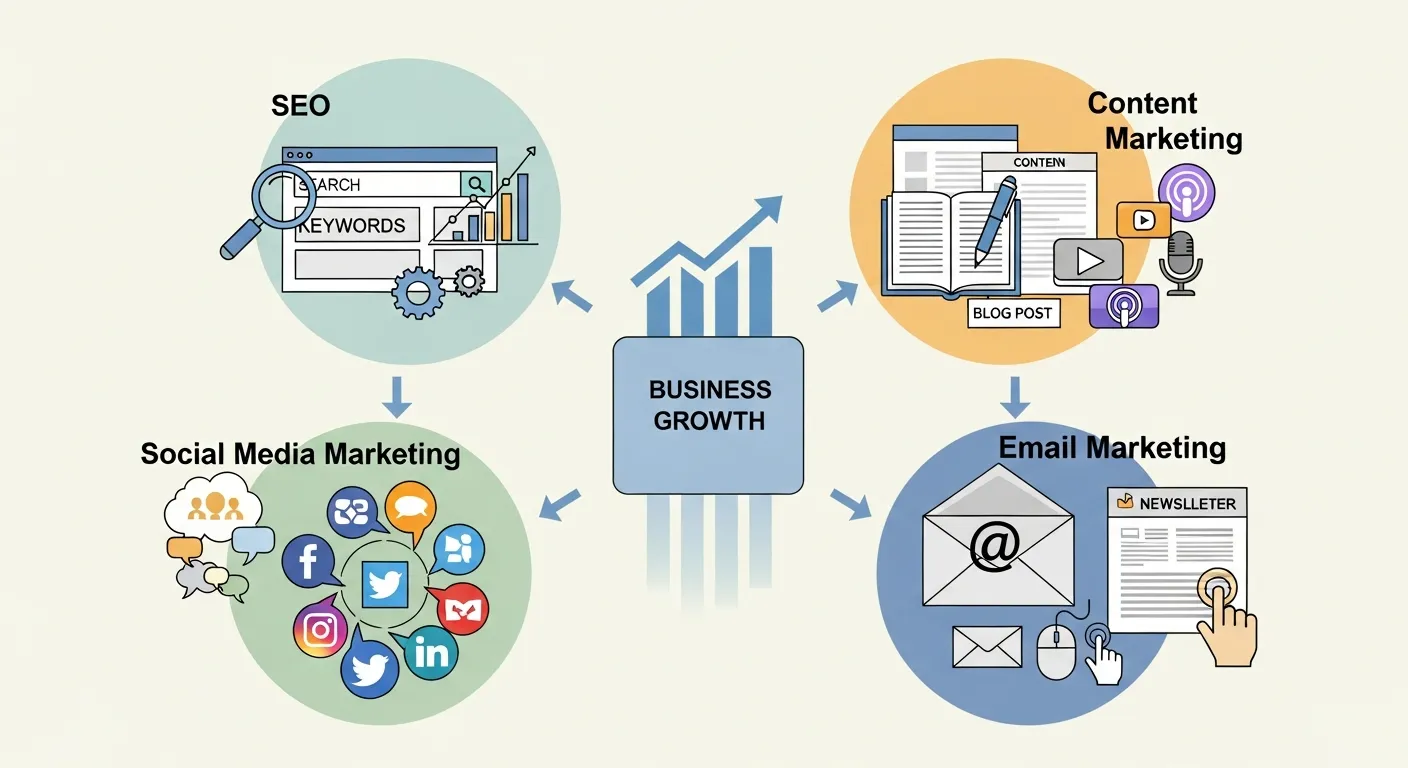
Digital marketing strategy solutions combine SEO, content, social media, and email to attract and convert customers. A clear, integrated plan with data-driven optimization helps businesses maximize ROI, build brand awareness, and achieve sustainable online growth.
The internet has completely changed how businesses connect with their customers. A few decades ago, placing an ad in a local newspaper or buying a billboard was enough to drive sales. Now, consumers spend hours every day scrolling through social media, reading blogs, and watching videos online. Businesses must adapt to this reality to stay relevant and competitive by implementing proven digital marketing strategy solutions.
Finding the right digital marketing strategy solutions can feel overwhelming. With so many platforms, tools, and techniques available, it is easy to get lost in the noise. Many companies waste money on disconnected tactics that fail to deliver real results. They might run a few Facebook ads or write a couple of blog posts, but without a unified plan, these efforts rarely lead to meaningful growth.
A documented, well-planned approach is the secret to online success. By understanding how different marketing channels work together, you can create a system that attracts, engages, and converts your ideal customers. This guide explores the core components of successful online marketing solutions and provides a clear roadmap for building a digital marketing strategy that actually works for your business.
Understanding the Foundation: What is a Digital Marketing Strategy?
Before jumping into specific tactics, you need to understand the basic building blocks of online marketing. A solid foundation ensures that your future efforts are built on solid ground. Effective digital marketing strategy solutions require deliberate planning and precise execution.
Defining Digital Marketing: More Than Just Online Ads
Digital marketing encompasses all marketing efforts that use an electronic device or the internet. Businesses leverage digital channels such as search engines, social media, email, and other websites to connect with current and prospective customers. It is a broad umbrella term that covers everything from the text on your website to the automated emails you send to new subscribers. Your digital marketing strategy dictates how these channels interact.
Today’s digital marketing landscape changes rapidly, fueled by trends like personalization, AI-driven automation, and new platforms emerging for both paid and organic activity. The goal is no longer just to be present—it’s to create meaningful, ongoing interactions with your audience. A powerful digital marketing strategy centers on customer experience, ensuring every touchpoint leaves a memorable and positive impact. Companies that actively invest in understanding and evolving with consumer behavior are the ones that succeed online.
Why a Strategy is Crucial: Goals, Audiences, and ROI
Jumping into digital marketing without a strategy is like building a house without a blueprint. A digital marketing strategy gives you direction. It helps you define clear, measurable goals, identify your exact target audience, and determine how you will achieve a positive return on investment (ROI). Without proper marketing campaign planning, you risk spending your budget on the wrong channels or sending the wrong message to the wrong people.
A strategic approach also brings long-term clarity. For example, knowing whether your goal is brand awareness, sales, lead generation, or loyalty (or all four) defines the messages you craft, the tools you choose, and the way you measure success. Setting benchmarks and KPIs for every campaign ensures ongoing improvement, not just a set-it-and-forget-it approach. Leaders who analyze data regularly can make pivots with confidence and stay ahead of the competition, ultimately maximizing their digital marketing investment.
Key Components of Robust Digital Marketing Strategy Solutions
A strong digital marketing strategy involves several moving parts working together seamlessly. It requires a clear understanding of your brand identity, a deep knowledge of your target market, and a selection of the right marketing channels. You also need specific performance indicators to measure success and a plan for continuous improvement based on the data you collect.
Some essentials at the heart of any modern digital strategy include:
- Customer journey mapping: Visualize every step a potential customer takes, from becoming aware of your brand to becoming a raving fan. Optimizing this journey with helpful content and smooth experiences sets top brands apart.
- Brand voice and positioning: Define how you want to be perceived and what makes your business unique in the vast digital landscape. Consistency across channels builds trust and recognition.
- Channel integration: Ensure your email, social, paid ads, and website messaging all reinforce each other. Cross-promotions and multichannel campaigns can skyrocket performance.
Pillars of a Successful Digital Marketing Strategy
Every great marketing plan relies on a few core pillars. These are the main channels and tactics you will use to reach your audience and achieve your business goals. Choosing the best online marketing solutions depends entirely on where your audience spends their time online.
Search Engine Optimization (SEO)
Search Engine Optimization helps your website appear higher in search engine results pages like Google. When people search for products or services related to your business, you want to be the first name they see. SEO is one of the most cost-effective digital marketing strategy solutions available today.
- On-Page SEO: Involves optimizing individual web pages to rank higher and earn more relevant traffic. This includes using the right keywords in your text, ensuring your site loads quickly, and creating high-quality content.
- Off-Page SEO: Refers to actions taken outside of your own website to impact your rankings within search engine results pages. The biggest factor here is earning high-quality backlinks from other reputable sites.
- Local SEO: If you have a physical storefront or serve a specific geographic area, local SEO is vital. This involves optimizing your online presence to attract more business from relevant local searches.
Staying current with SEO trends is critical. In 2024 and beyond, core web vitals, site accessibility, AI-generated snippets, and voice search optimization have become essential to improve rankings and stay visible.
Content Marketing: Engaging Your Audience
Content marketing focuses on creating and distributing valuable, relevant, and consistent content to attract and retain a clearly defined audience. This is the fuel that powers your digital marketing strategy solutions.
Written content is a powerful way to educate your audience and demonstrate your expertise. Blog posts help capture search traffic and answer common customer questions. Longer formats like whitepapers or detailed articles are excellent online marketing solutions for generating leads. Users are often willing to exchange their email addresses for highly valuable information.
Video is incredibly popular and highly engaging. People love watching short, informative videos on platforms like YouTube, TikTok, and Instagram. Video marketing allows you to show your product in action, share customer testimonials, or explain complex concepts in a highly digestible format.
Don’t overlook new content formats—webinars, podcasts, and interactive tools like quizzes can help you connect on a deeper level while delivering value to your audience at scale.
Social Media Marketing: Building Community
Social media platforms offer a direct line of communication to your customers. They are perfect for building brand awareness and fostering a loyal community. Effective digital marketing strategy solutions always include a tailored social media approach.
You do not need to be on every social media platform. The key to excellent marketing campaign planning is finding where your specific audience spends their time. A B2B software company might focus heavily on LinkedIn, while a fashion brand will see better results on Instagram and Pinterest. Success requires active engagement, moving from simple likes to deep brand loyalty.
Social commerce, influencer partnerships, and user-generated content campaigns are among the fastest-growing tactics. Brands that leverage authentic voices and encourage audience participation tend to achieve higher engagement rates and better long-term results.
Email Marketing: Nurturing Leads
Email remains one of the most effective online marketing solutions available. It allows you to speak directly to people who have already shown interest in your business.
To succeed with email marketing, you need a healthy list of subscribers. You can grow your list by offering lead magnets like free ebooks, discount codes, or exclusive access to webinars in exchange for an email address. Segmentation involves dividing your email list into smaller groups to send highly personalized messages that resonate deeply with each recipient.
Advanced automation, personalized recommendations, and behavioral triggers are transforming what’s possible with email. When backed by insightful analytics and creative copy, email marketing becomes a true powerhouse in digital marketing strategy solutions.
Creating an Integrated Marketing Strategy
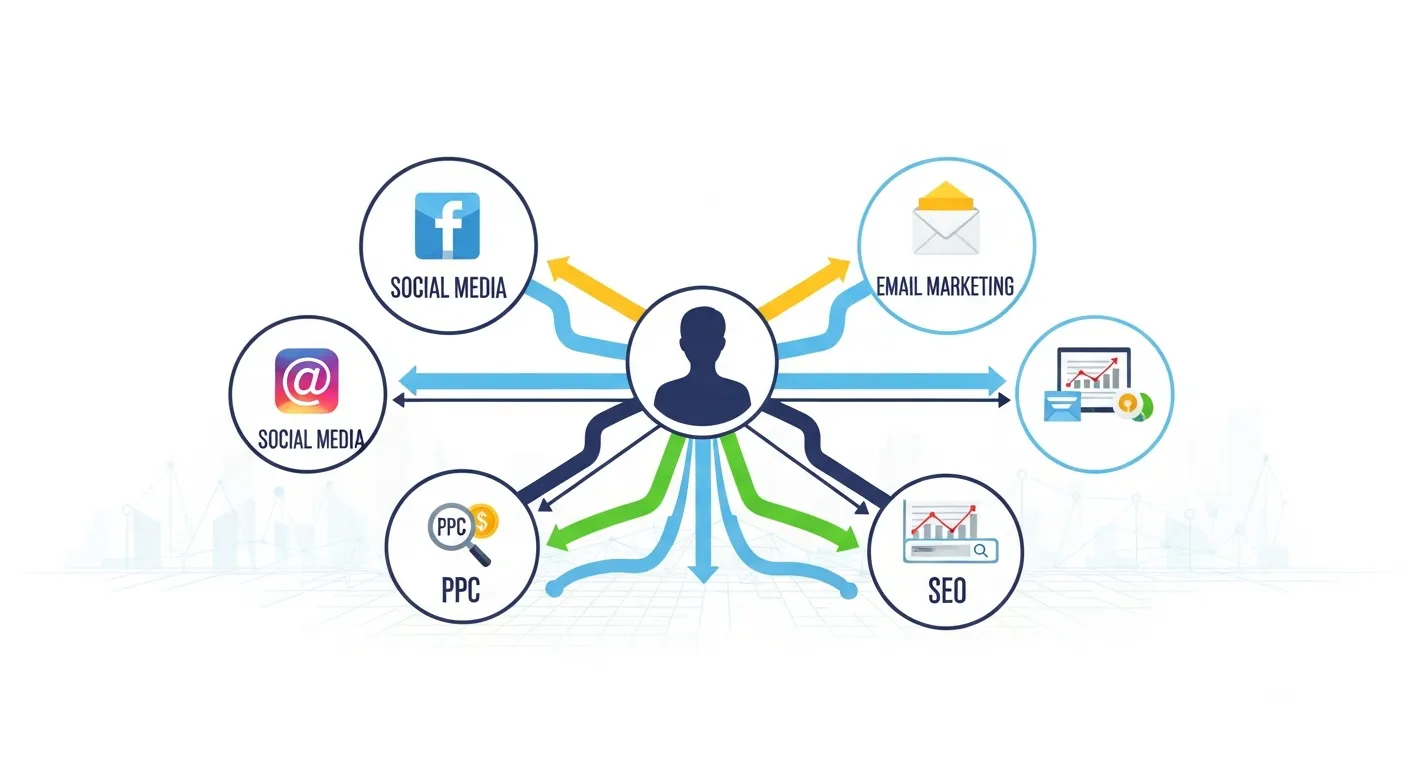
Most businesses fail when they treat each marketing channel as a separate silo. You need an integrated marketing strategy to ensure all your messaging aligns perfectly across every platform.
An integrated approach means your email marketing supports your social media, and your social media supports your SEO efforts. This unified brand experience builds trust faster than disconnected tactics. To truly understand how to pull these distinct channels into one cohesive roadmap, you can review the principles of an integrated marketing strategy to unify your messaging. By aligning your goals, you maximize the impact of your online marketing solutions.
A key part of integration is cross-channel data analysis. Modern marketers use attribution modeling tools to understand which touchpoints drive the most value. For example, a customer may discover your brand through paid search, follow you on social media, open an email offer, and finally convert after reading a review. Integrated analytics platforms help you optimize each step and maximize your marketing ROI.
Comparing Top Online Marketing Solutions
Choosing the right mix of channels requires understanding the strengths and weaknesses of each platform. Below is a breakdown of common online marketing solutions used in top-tier digital marketing strategy solutions.
|
Marketing Channel |
Primary Goal |
Speed of Results |
Best Used For |
|---|---|---|---|
|
SEO |
Organic Traffic |
Slow (3-6 Months) |
Long-term authority and cost-effective leads |
|
PPC Advertising |
Immediate Traffic |
Fast (Immediate) |
Launching new products, testing offers |
|
Email Marketing |
Lead Nurturing |
Medium |
Building loyalty and driving repeat sales |
|
Social Media |
Brand Awareness |
Medium |
Community building and customer engagement |
|
Content Marketing |
Education & Trust |
Slow to Medium |
Establishing industry expertise |
While some solutions deliver quick wins (like PPC), others are long games (like SEO and content marketing). Building a healthy marketing mix that leverages the immediate results of paid channels with the compounding value of organic strategies is a hallmark of robust digital marketing strategy solutions.
Advanced Marketing Campaign Planning
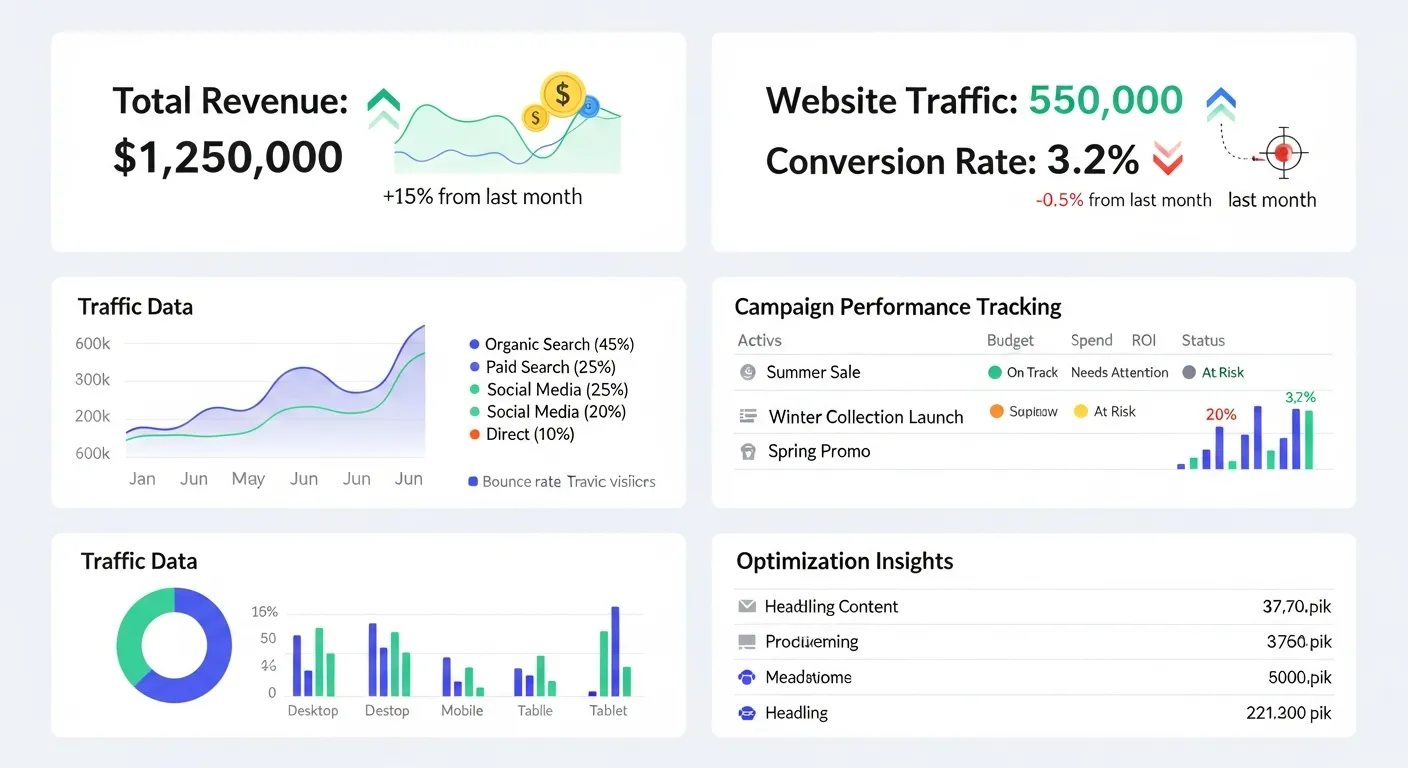
Once you have the pillars in place, you can explore advanced digital marketing strategy solutions to multiply your results and streamline your processes. Advanced marketing campaign planning requires looking deeply at the data your campaigns generate.
Marketing Automation and Personalization
Marketing automation software helps you handle repetitive tasks effortlessly. It can schedule social media posts, manage email campaigns, and update customer records automatically. This frees up your team’s time to focus on high-level digital marketing strategy and creative work.
Automation also enables remarketing and abandoned cart campaigns, customized landing pages, and audience segmentation at scale. The most successful companies blend humans and technology to deliver an optimal balance of efficiency and empathy.
Data Analytics and Reporting
Digital marketing provides a wealth of data to guide your future decisions. Tools like Google Analytics show you exactly how people find your website and what they do once they arrive. Regular reporting allows you to see which online marketing solutions are working and which ones need immediate adjustments.
Predictive analytics and machine learning are game changers for businesses seeking an edge. Instead of simply reporting on the past, today’s marketers can forecast trends, anticipate customer actions, and fine-tune campaigns in real-time.
Conversion Rate Optimization (CRO)
Getting traffic to your website is only half the battle. You also need those visitors to take action. Conversion Rate Optimization involves testing different elements of your website to see which versions generate the most sales. Strong digital marketing strategy solutions always include continuous testing of headlines, button colors, and page layouts.
CRO best practices now include heatmaps, A/B testing, multivariate analysis, and even AI-powered personalization. Focusing on the user journey, removing friction, and providing compelling calls-to-action can lead to dramatic gains in revenue from the same source of traffic.
Additional Components for Long-Term Success
Influencer Marketing: Harnessing Trust and Reach
Influencer marketing has become mainstream in digital marketing strategy solutions. Micro- and nano-influencers often deliver stronger engagement than big celebrities, since their recommendations feel more authentic. To succeed, choose influencers whose audience matches your buyer personas and prioritize long-term partnerships over one-off sponsored posts.
Voice Search and Visual Search Optimization
With the rise of virtual assistants and smartphone cameras, voice and visual search are the next frontier. Optimize your content for question-based keywords and natural language. For visual search, ensure all images are properly tagged and high in quality, allowing users to find products directly from their photos.
Responsive Design and Mobile-First Strategies
A truly effective digital marketing strategy recognizes that most users will engage with your brand on mobile devices. All assets—from emails to landing pages—must be fast, visually appealing, and intuitive. Google’s “mobile-first” indexing makes this not just a best practice, but absolutely essential to organic reach and conversions.
Reputation Management and Social Listening
Brands can rise or fall based on word-of-mouth. Monitor reviews, respond to customer feedback, and use social listening tools to track brand sentiment across the web. Proactive crisis response and showcasing positive experiences amplify trust and will power your integrated marketing strategy for the long haul.
Step-by-Step Marketing Campaign Planning
Building your digital marketing strategy requires a systematic approach. Follow these steps to create a comprehensive plan for your business that leverages the best online marketing solutions.
Define Your Goals and Target Audience
Start your marketing campaign planning by setting Specific, Measurable, Achievable, Relevant, and Time-bound (SMART) goals. Instead of saying “I want more website traffic,” set a goal to “increase organic website traffic by 20% over the next six months.” Next, create detailed buyer personas that represent your ideal customers. Document their demographics, pain points, motivations, and preferred communication channels.
Choose Your Channels and Budget
Based on your goals and audience research, select the most appropriate digital marketing strategy solutions. Remember that you do not need to use every available platform. Focus on the few channels that will provide the highest return on investment for your specific business. Determine how much money and time you can dedicate, allocating your budget across your chosen channels carefully.
Create Content and Launch Campaigns
Develop high-quality content tailored to each stage of your customer journey. Use a calendar for planning. As campaigns launch, watch the data closely and make real-time adjustments based on performance metrics.
Review, Optimize, and Evolve
Digital marketing is not “set and forget.” Regularly review campaign data, seek customer feedback, and stay up-to-date on new tools and trends. Iterate on your strategy every quarter to ensure ongoing relevance and growth.
Frequently Asked Questions
What are digital marketing strategy solutions?
Digital marketing strategy solutions are comprehensive plans that combine various online channels to achieve specific business goals. They integrate tactics like SEO, email marketing, and social media to drive traffic, capture leads, and boost sales. A proper strategy prevents wasted budget and ensures maximum ROI.
Why is marketing campaign planning important?
Marketing campaign planning provides a clear roadmap for your business to reach its target audience effectively. It outlines your goals, budget, messaging, and chosen platforms before you spend a single dollar. This deliberate planning minimizes risk and keeps your entire marketing team perfectly aligned.
How do I create an integrated marketing strategy?
You create an integrated marketing strategy by ensuring your brand message remains consistent across all digital channels. Your social media posts, email newsletters, and website copy should share the same tone, visuals, and core offers. This cohesive approach builds stronger brand recognition and deeper customer trust.
What are the most effective online marketing solutions?
The most effective online marketing solutions depend on your business, but SEO, content marketing, and email marketing consistently offer the highest long-term ROI. For those looking to dive deeper into specialized tactics, exploring the top website marketing strategies for growth can provide a massive competitive advantage. Paid advertising is also excellent for driving immediate traffic.
How long does a digital marketing strategy take to work?
The timeline for seeing results from your digital marketing strategy depends heavily on the specific channels you utilize. Paid advertising can generate traffic and sales within hours of launching a campaign. Conversely, organic methods like SEO and content marketing typically take three to six months to show significant momentum.
Can small businesses afford digital marketing strategy solutions?
Yes, small businesses can absolutely afford effective digital marketing strategy solutions by prioritizing highly targeted, cost-effective channels. Starting with local SEO, organic social media posting, and basic email marketing requires more time than financial investment. As revenue grows, the business can reinvest in paid advertising.
What role does content play in online marketing solutions?
Content is the absolute foundation of all successful online marketing solutions and campaigns. It is what search engines index, what users share on social media, and what convinces a prospect to trust your brand. Without high-quality, relevant content, your digital marketing strategy simply cannot function.
How do I measure the success of my digital marketing strategy?
You measure the success of your digital marketing strategy by tracking Key Performance Indicators (KPIs) tied directly to your business goals. Common metrics include website traffic, conversion rates, cost per acquisition, and email open rates. Tools like Google Analytics provide the hard data needed to evaluate your performance accurately.
Should I hire an agency for marketing campaign planning?
Hiring an agency for marketing campaign planning is highly recommended if you lack the internal expertise or time to execute complex strategies. Agencies bring a wealth of experience, specialized tools, and dedicated teams to manage your campaigns. This often yields better, faster results than attempting to learn everything from scratch internally.
How often should I update my integrated marketing strategy?
You should review and update your integrated marketing strategy at least once every quarter to ensure it remains aligned with your business goals. Digital algorithms, consumer behaviors, and industry trends change rapidly, requiring constant adaptation. A stagnant strategy will quickly lose its effectiveness against proactive competitors.
In conclusion, digital marketing strategy solutions are more than a checklist of tactics—they are a dynamic, holistic approach to online growth. The most successful brands blend creativity, data, technology, and empathy to create strategies that not only get attention but build lasting relationships. By systematically applying the pillars, planning methodologies, and optimizations discussed above, your business can thrive in an ever-evolving marketplace. Keep learning, keep testing, and never lose sight of your core customer—those principles will ensure your marketing success both today and far into the future.