
This guide explains the essential digital marketing resources beginners need, including tools, strategies, SEO, email marketing, analytics, and content marketing. Learn how to build an effective marketing system, avoid common mistakes, and grow your business steadily online.
Growing a business online can feel overwhelming when you don’t know which tools, tactics, or guides to trust. There are thousands of options, dozens of channels, and endless opinions. The good news? You only need a solid grasp of the core digital marketing resources to start making smart, confident decisions.
This guide cuts through the clutter. We’ll walk through the essential tools, strategies, and advice that beginners actually need. Whether you run a small shop, manage a startup, or simply want to grow a personal brand, these foundations will set you up for steady progress.
Here’s what you’ll learn:
- Which core digital marketing resources matter most and why
- A practical look at popular tools and how to compare them
- Proven website marketing strategies you can apply today
- Honest answers to common questions, including whether affiliate links help SEO
Let’s build your foundation, one piece at a time.
What Are Core Digital Marketing Resources?
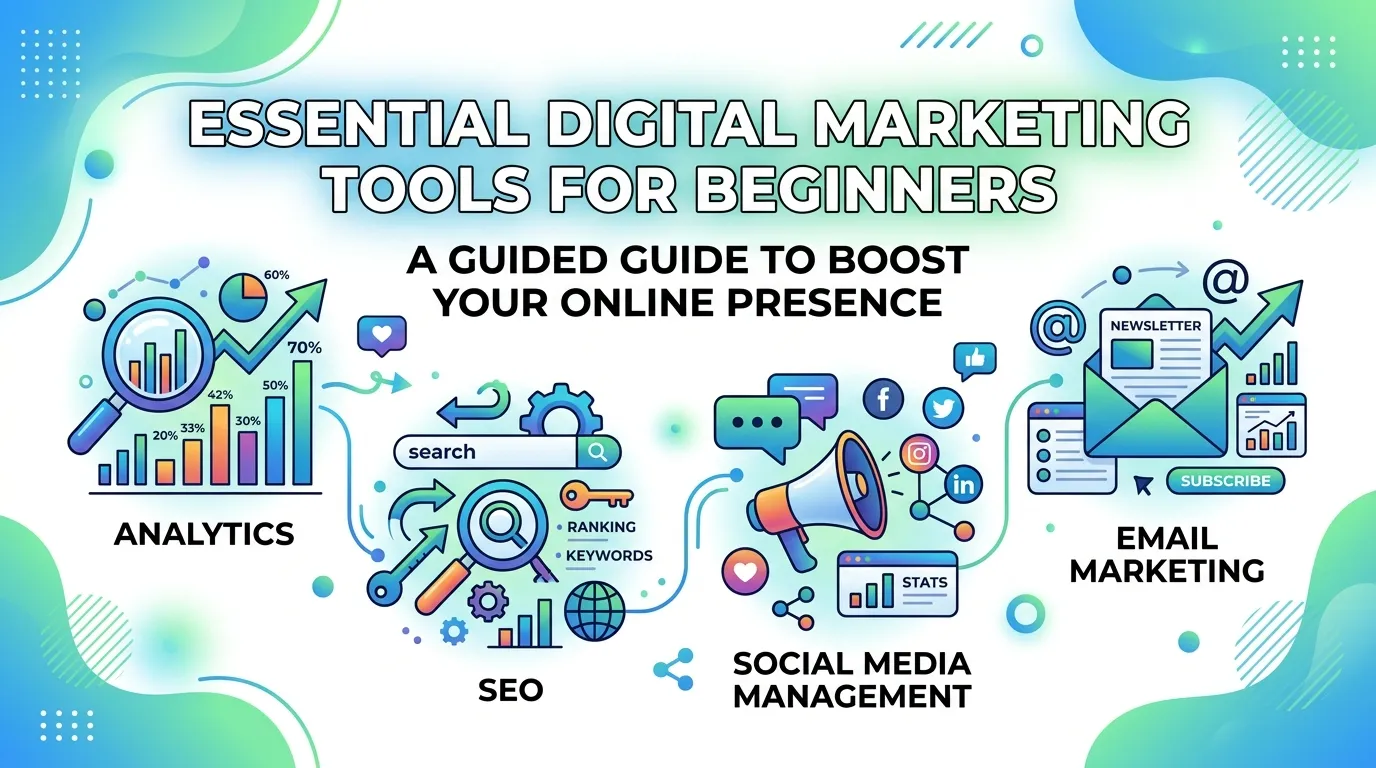
Core digital marketing resources are the essential tools, platforms, strategies, and knowledge sources that help you attract, engage, and convert your audience online. Think of them as your toolkit and playbook combined.
These resources fall into a few broad groups: software tools that automate work, strategic frameworks that guide your decisions, and trusted advice that keeps you learning. When you understand all three, your marketing becomes far more effective.
Beginners often jump straight to flashy tools without a plan. That’s a mistake. The strongest results come from pairing the right resources with a clear strategy. A great tool used poorly delivers weak results, while a simple tool used wisely can drive real growth.
In short, core digital marketing resources give you both the “what” and the “how” of reaching people online. Master them, and every campaign you run gets sharper.
Key takeaway: Resources include tools, strategies, and advice working together, not just software.
Why These Resources Matter for Beginners
When you’re starting out, time and budget are tight. The right resources help you avoid costly mistakes and wasted effort. They show you what works, what to skip, and where to focus first.
Good resources also shorten your learning curve. Instead of guessing, you follow proven paths that others have tested. That confidence keeps you moving forward instead of feeling stuck.
Popular Digital Marketing Tools You Should Know
Let’s talk tools. Popular digital marketing tools handle the heavy lifting so you can focus on strategy and creativity. They save time, track results, and help you make decisions based on real data.
You don’t need every tool at once. Start with a few essentials, learn them well, and add more as your needs grow. Below is a simple breakdown of the categories that matter most.
Categories of Marketing Tools
Most marketing tools fit into one of these groups:
- Analytics tools track visitors, behavior, and conversions
- SEO tools help you find keywords and improve rankings
- Email marketing tools manage lists and automate campaigns
- Social media tools schedule posts and measure engagement
- Design tools create graphics, videos, and visuals
- Advertising platforms run paid campaigns across channels
Each category solves a specific problem. The trick is choosing tools that fit your goals and budget rather than collecting every shiny option.
Marketing Tools Examples Worth Exploring
Here are a few marketing tools examples grouped by purpose, so you can see how they fit together:
- For analytics: Google Analytics gives you free, detailed visitor data
- For SEO: keyword research platforms reveal what people search for
- For email: automation services nurture leads on autopilot
- For social media: scheduling apps keep your posting consistent
- For design: drag-and-drop editors make professional visuals easy
These examples show that you can build a capable stack without spending a fortune. Many top digital marketing tools offer free tiers that work well for beginners.
Key takeaway: Pick a few tools per category, learn them deeply, then expand as you grow.
Online Marketing Tools List: Building Your Stack
Putting together your own online marketing tools list helps you stay organized and intentional. Instead of random subscriptions, you build a connected system where each tool supports the others.
Start by mapping your goals. Do you want more traffic, more leads, or more sales? Your goals decide which tools deserve a spot on your list. A traffic-focused beginner needs SEO and content tools, while a sales-focused one might prioritize email and ad platforms.
The table below compares common tool categories to help you choose what belongs on your list.
|
Tool Category |
Main Purpose |
Best For Beginners? |
Typical Cost |
|---|---|---|---|
|
Analytics |
Track and measure performance |
Yes, essential |
Free options available |
|
SEO |
Improve search rankings |
Yes, high value |
Free to mid-range |
|
Email Marketing |
Nurture and convert leads |
Yes, easy to start |
Free to low-cost tiers |
|
Social Media |
Schedule and engage |
Optional early on |
Free to mid-range |
|
Design |
Create visual content |
Helpful |
Free to low-cost |
|
Paid Ads |
Drive instant traffic |
Later stage |
Pay-per-use budget |
Use this as a starting point. Your ideal stack will evolve as your skills and business grow. The goal is a lean, effective set of tools, not the biggest collection.
How to Choose the Right Tools
Ask yourself three simple questions before adding any tool:
- Does it solve a problem I actually have right now?
- Can I learn it without weeks of training?
- Does it fit my budget and integrate with my other tools?
If you answer yes to all three, it’s likely a good fit. If not, wait. The best online marketing tools list is the one you’ll actually use consistently.
Key takeaway: Build your stack around your goals, not around hype or trends.
Best Website Marketing Strategies for Steady Growth
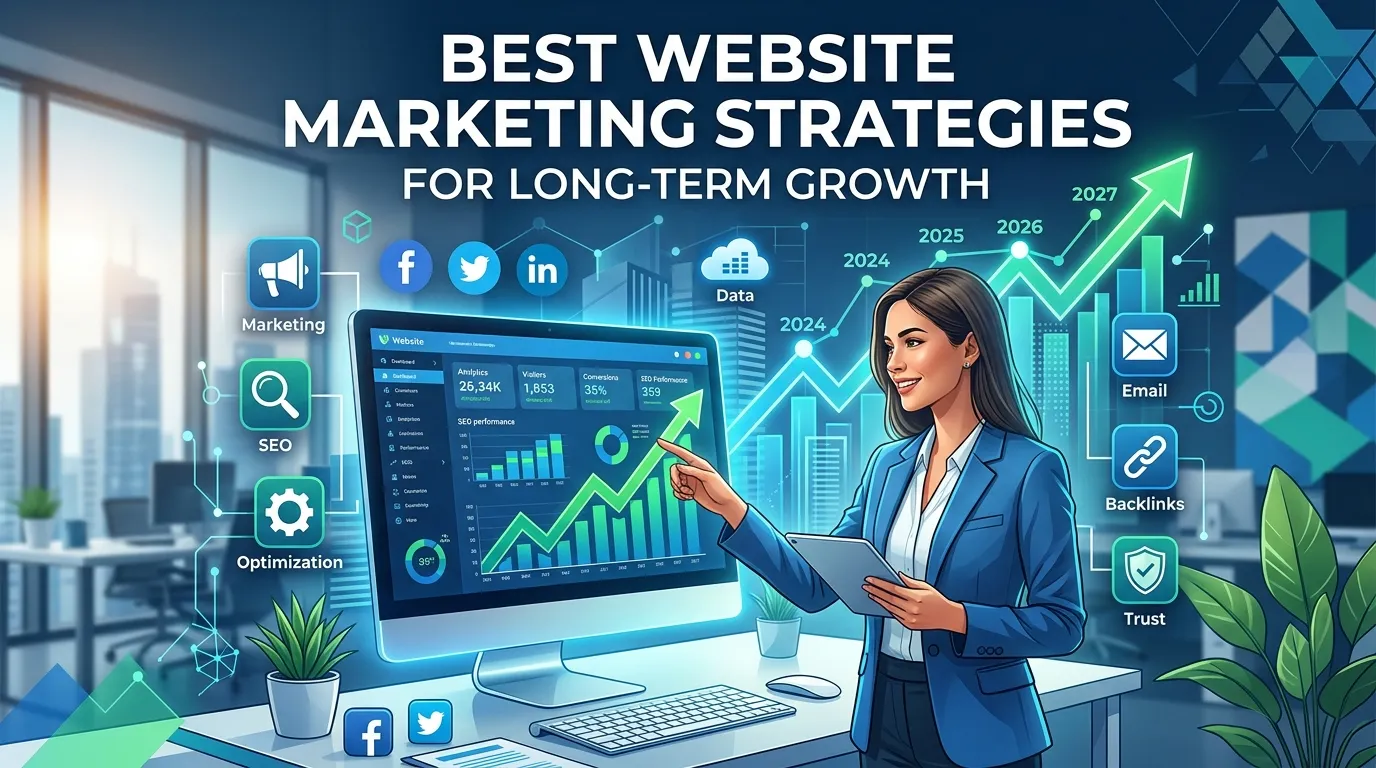
Tools alone won’t grow your business. You need direction. The best website marketing strategies turn scattered effort into measurable results. They tell you where to focus and how to win.
A strong strategy connects your goals, your audience, and your channels. It answers questions like: Who am I trying to reach? What do they want? Where do they spend time online? Once you know these answers, your tactics fall into place.
Strategy 1: Content Marketing
Content marketing means creating helpful articles, videos, and guides that attract your audience. It builds trust, improves SEO, and gives people a reason to visit and return. This is one of the most reliable digital marketing strategy solutions for long-term growth.
Focus on answering real questions your audience asks. Quality and consistency matter far more than volume. A few excellent pieces beat dozens of thin ones every time.
Strategy 2: Search Engine Optimization
SEO helps your website appear higher in search results. When done well, it brings steady, free traffic for months or years. It pairs naturally with content marketing since great content needs to be found.
Start with keyword research, write for your readers first, and keep your site fast and mobile-friendly. These basics drive most of your early SEO wins.
Strategy 3: Email Marketing
Email remains one of the highest-return channels available. It lets you reach people directly, build relationships, and promote offers without paying for each click. Building an email list early pays off massively later.
Offer something valuable in exchange for sign-ups, like a free guide or discount. Then nurture your subscribers with helpful content and occasional offers.
Strategy 4: Social Media Engagement
Social media helps you build community and stay visible. You don’t need every platform, just the one or two where your audience hangs out. Show up consistently, share useful content, and engage in real conversations.
The best website marketing strategies usually combine several of these approaches. Each channel supports the others, creating a system that compounds over time.
Key takeaway: Combine content, SEO, email, and social media for balanced, lasting growth.
Digital Marketing Strategy Solutions That Scale
As your business grows, you’ll need digital marketing strategy solutions that can scale with you. Scaling means doing more without burning out or breaking your budget. The secret lies in systems and automation.
Automation handles repetitive tasks so you can focus on creativity and strategy. Scheduled emails, automated social posts, and recurring reports free up hours each week. These small efficiencies add up fast.
Documenting Your Strategy
Write your strategy down. A documented plan keeps your team aligned and your efforts focused. It should include your goals, target audience, key channels, and how you’ll measure success.
You don’t need a fancy document. A simple one-page plan works. The act of writing it forces clarity and reveals gaps you might otherwise miss.
Measuring What Matters
Track a few key metrics rather than drowning in data. Focus on numbers tied to your goals, like traffic growth, conversion rate, and return on spend. These tell you what’s working and what needs adjusting.
Review your metrics regularly, then refine your approach. Smart digital marketing strategy solutions are never static; they improve with every cycle of testing and learning.
Key takeaway: Scale with automation, a written plan, and a focus on meaningful metrics.
Do Affiliate Links Help SEO?
A question that pops up often is, “do affiliate links help seo?” The honest answer is nuanced. Affiliate links themselves don’t directly boost your rankings, but the content around them can.
Search engines generally treat affiliate links as a neutral or “nofollow” type of link, meaning they don’t pass ranking power the way editorial links do. So you won’t climb the rankings just by adding affiliate links to your pages.
However, affiliate content can help SEO indirectly. When you create genuinely helpful reviews, comparisons, and guides, you attract visitors and earn engagement. That quality content ranks well on its own merits. The affiliate links simply monetize the traffic.
Best Practices for Affiliate Content
To keep your SEO healthy while using affiliate links, follow these tips:
- Add proper disclosure so readers and search engines know about affiliate relationships
- Use nofollow or sponsored tags on affiliate links as recommended
- Prioritize genuine value over pushing products
- Avoid stuffing pages with too many links
When you focus on helping readers first, affiliate links become a bonus rather than a risk. Quality content always wins.
Key takeaway: Affiliate links don’t directly raise rankings, but helpful affiliate content can.
Web Marketing Advice Every Beginner Needs
Solid web marketing advice can save you months of trial and error. The right guidance helps you skip common pitfalls and focus on what truly moves the needle. Here’s advice that consistently delivers.
First, start before you feel ready. Many beginners wait for the “perfect” plan and never launch. Action beats perfection. You learn far more by doing and adjusting than by planning endlessly.
Second, know your audience deeply. Understanding their needs, language, and habits shapes everything from your content to your tools. Marketing that ignores the audience rarely succeeds.
Trusted Sources for Learning
Quality learning resources keep your skills sharp. There are countless blogs, courses, and guides, but a few stand out for clarity and reliability. Bookmark trusted sources and revisit them as you grow.
For a clear, authoritative overview of how online marketing works, this resource is worth a read:
A helpful primer on internet marketing fundamentals Read it early in your journey, then return as your understanding deepens. Pairing trusted guides with hands-on practice accelerates your growth.
Practical Internet Marketing Tips
Here are quick internet marketing tips you can apply right away:
- Test one change at a time so you know what caused results
- Repurpose content across channels to save time
- Focus on mobile users since most browsing happens on phones
- Build an email list from day one
- Track your results so you invest in what works
These small habits compound. Apply them consistently, and your results will climb steadily.
Key takeaway: Start now, know your audience, and learn from trusted sources while you practice.
Top Digital Marketing Tools by Function
Let’s go deeper into the top digital marketing tools, organized by what they help you accomplish. Understanding their functions helps you choose wisely rather than chasing brand names.
Tools for Finding Your Audience
These tools help you understand who your audience is and what they want. Analytics platforms reveal where visitors come from and how they behave. Keyword tools show what people search for, guiding your content choices.
With this insight, you stop guessing and start creating exactly what your audience needs. That precision makes every other effort more effective.
Tools for Creating Content
Content tools help you produce articles, graphics, and videos efficiently. Design platforms let non-designers create polished visuals, while writing aids speed up drafting and editing. Scheduling tools keep your output consistent.
The goal is to publish quality content regularly without burning out. The right tools make consistency far easier to maintain.
Tools for Converting Visitors
Once visitors arrive, conversion tools turn them into leads and customers. Email platforms nurture relationships, landing page builders capture sign-ups, and analytics track which efforts pay off.
These tools close the loop between attracting attention and earning results. Together with the right strategy, they form a complete growth system.
Key takeaway: Choose tools by function: finding, creating, and converting your audience.
Common Digital Marketing Mistakes to Avoid
Even with great resources, beginners often stumble on the same mistakes. Knowing them in advance helps you sidestep wasted time and money. Here are the pitfalls to watch for.
Spreading Yourself Too Thin
Trying every channel at once leads to mediocre results everywhere. It’s better to master one or two channels before expanding. Focus builds momentum; scatter slows it down.
Pick the channels where your audience spends time, then go deep. You can always add more once your foundation is solid.
Ignoring Data
Some marketers run on gut feeling alone. Without tracking results, you can’t tell what’s working. That guesswork wastes budget and slows growth.
Set up basic analytics from the start. Even simple tracking reveals powerful insights that guide smarter decisions.
Chasing Trends Over Strategy
New tactics and tools appear constantly. Jumping on every trend distracts you from your core plan. Trends come and go, but a solid strategy endures.
Evaluate new ideas against your goals before adopting them. If a trend doesn’t serve your strategy, it’s okay to skip it.
Key takeaway: Stay focused, track your data, and let strategy guide your choices.
Digital Marketing Tips to Put Into Action
Let’s gather the most useful digital marketing tips into one practical section. These are habits and actions you can start this week to see real progress.
Begin with a clear goal. Vague aims like “get more traffic” are hard to act on. Specific goals like “grow email subscribers by 20% this quarter” give you direction and a way to measure success.
Next, build consistency into your routine. Marketing rewards regular effort more than occasional bursts. A steady publishing and engagement schedule beats sporadic activity every time.
Quick-Win Digital Marketing Advice
Here’s straightforward digital marketing advice for fast progress:
- Optimize your best pages before creating new ones
- Answer your audience’s top questions in your content
- Send a simple welcome email to new subscribers
- Reuse your top content in new formats
- Set aside time weekly to review results and adjust
These actions require little budget but deliver real returns. Apply a few each week, and you’ll build powerful momentum.
Staying Motivated Through Slow Starts
Marketing results often take time. Early efforts may feel slow, which discourages many beginners. Remind yourself that growth compounds. The work you do today pays off weeks and months later.
Celebrate small wins along the way. Each new subscriber, ranking, or sale proves your system works. Those wins fuel the persistence that long-term success requires.
Key takeaway: Set specific goals, stay consistent, and celebrate small wins to keep momentum.
Frequently Asked Questions
What are the most important core digital marketing resources for beginners?
The most important core digital marketing resources include analytics tools, SEO basics, an email platform, and a clear strategy. Together, these cover measuring, attracting, and converting your audience. Start with free or low-cost options and learn them well. Add more resources only as your needs and skills grow.
Do affiliate links help SEO or hurt my rankings?
Affiliate links don’t directly boost your rankings since search engines often treat them as nofollow. They won’t hurt you either, as long as you disclose them and avoid stuffing pages. The real SEO value comes from the helpful content around those links. Focus on quality reviews and guides that genuinely serve readers.
Which popular digital marketing tools should I start with?
Begin with a few popular digital marketing tools that cover analytics, SEO, and email. Google Analytics tracks your performance for free, while keyword tools guide your content. An email platform helps you build relationships early. Master these essentials first before adding social or design tools.
How do I build an effective online marketing tools list?
Start your online marketing tools list by mapping your goals, then choose tools that solve real problems. Pick one tool per category, like analytics, SEO, and email, to keep things simple. Make sure each one fits your budget and integrates well. Expand the list gradually as your business and skills grow.
What are the best website marketing strategies for a new business?
The best website marketing strategies for beginners combine content marketing, SEO, and email marketing. Content attracts visitors, SEO helps them find you, and email nurtures relationships. Add social media engagement where your audience is active. Together, these create a balanced system that grows steadily over time.
How do digital marketing strategy solutions help me scale?
Digital marketing strategy solutions help you scale through systems, automation, and clear measurement. Automating repetitive tasks frees up time for creative work and big-picture thinking. A documented plan keeps your efforts focused as you grow. Tracking key metrics shows you where to invest for the best returns.
What web marketing advice matters most when starting out?
The most valuable web marketing advice is to start before you feel ready and know your audience deeply. Action teaches you more than endless planning ever will. Understand your audience’s needs to shape your content and tool choices. Learn from trusted sources while you practice and adjust along the way.
What are some quick internet marketing tips I can apply today?
Useful internet marketing tips include testing one change at a time and repurposing content across channels. Focus on mobile users since most browsing happens on phones. Build an email list from day one to capture leads early. Always track your results so you can double down on what works.
How do I choose the top digital marketing tools for my needs?
Choose top digital marketing tools by their function rather than their brand name. Decide whether you need help finding, creating, or converting your audience first. Then pick tools that solve that specific problem within your budget. Make sure they’re easy to learn and integrate with your existing setup.
Can you share some practical marketing tools examples for beginners?
Practical marketing tools examples include Google Analytics for tracking, keyword tools for SEO, and email platforms for automation. Design editors help you create visuals without design skills. Social scheduling apps keep your posting consistent. Most of these offer free tiers, so you can start without a big budget.
What digital marketing tips help me stay consistent?
The best digital marketing tips for consistency start with setting specific, measurable goals. Build marketing into a regular routine instead of working in random bursts. Reuse your top content in new formats to save time and effort. Review your results weekly so you keep improving and stay motivated.
How long before digital marketing advice starts showing results?
Most digital marketing advice takes weeks or months to show meaningful results. SEO and content marketing build slowly but deliver lasting traffic. Email and paid ads can produce faster wins. Stay patient, track your progress, and celebrate small victories to keep your momentum strong through slower periods.
Conclusion: Your Next Step With Digital Marketing
You now have a clear map of the core digital marketing resources that power online growth. We covered the essential tools, practical strategies, honest advice on affiliate links and SEO, and the tips that turn knowledge into action.
The big lesson is simple: success comes from pairing the right resources with a focused strategy and consistent effort. You don’t need every tool or tactic. You need the right few, applied well, over time.
Your next step is action. Pick one strategy from this guide, choose a single tool to support it, and start this week. Track your results, adjust as you learn, and keep building. Small, steady steps compound into real growth, and you’re now equipped to take them.