

Affiliate links don’t directly improve SEO, but when used correctly with proper tags and high-quality content, they enhance user experience, engagement, and authority—leading to stronger search rankings and sustainable website monetization.
If you run a blog or a website, you have probably considered monetizing it. Affiliate marketing serves as one of the most popular ways to generate revenue online. You simply place a tracked link to a product or service, and when someone makes a purchase through that link, you earn a commission.
But a common question plagues many website owners: do affiliate links help SEO?
Some creators worry that adding these links will tank their search engine rankings. Others believe that linking out to high-authority e-commerce sites might give them a secret ranking boost. The reality requires a deeper look. Understanding how search engines view affiliate links is critical if you want to protect your site’s visibility while earning an income. This guide will clarify exactly how affiliate links interact with your affiliate marketing SEO strategy and how to use them safely.
The Direct Impact: Do Affiliate Links Affect Rankings?
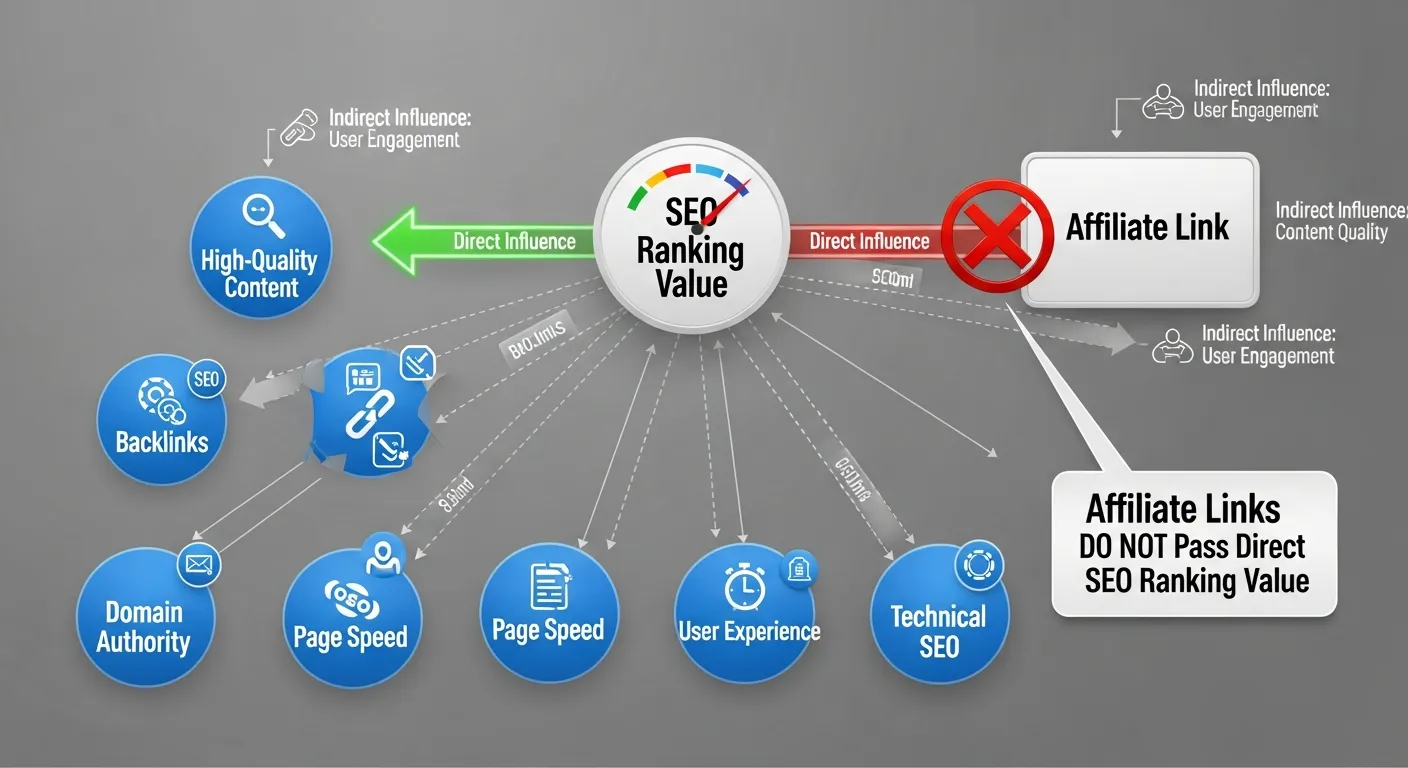
To answer the core question—do affiliate links help SEO directly?—the answer is no. Search engines like Google do not boost your rankings simply because you link to a product on Amazon or a software platform. In fact, if not handled properly, they can cause issues for your website.
When you ask, do affiliate links affect rankings directly, you have to look at how link equity works. Standard links pass authority from one page to another. However, search engines view affiliate links as paid arrangements.
Understanding Nofollow, Sponsored, and UGC Attributes
When you add a link to your site, search engine crawlers follow it to understand the relationship between your page and the destination page. For standard links, this passes link equity. Because affiliate links involve financial compensation, you must tag these links with specific HTML attributes, specifically rel="sponsored" or rel="nofollow".
These tags explicitly tell search engines not to pass any ranking credit to the linked site. Because no equity is passed, the link itself does not directly help your SEO. Proper tagging remains a cornerstone of a solid affiliate marketing SEO strategy.
The Importance of Choosing the Right Link Attribute
Choosing the right link attribute isn’t just about following Google’s guidelines—it’s about building long-term SEO resilience. A “sponsored” tag is required by Google for any link resulting from compensation, sponsorship, or other incentive. Choosing between rel="sponsored" and rel="nofollow" depends on the context. Sponsored is a clearer signal for affiliate links, while nofollow can be used in cases where you’re linking to sources for which you want neither to vouch nor pass equity. The third attribute, UGC (User Generated Content), is more suited for forums or blog comments, not affiliate links.
Failure to properly tag links can eventually lead to loss of trust with search engines, causing a drop in overall ranking and visibility.
How Search Engines Crawl and Index Affiliate Links
When a search engine spider crawls your page, it reads the HTML code. If it sees an affiliate link properly tagged with a sponsored attribute, it registers the link but ignores it for ranking calculations. If you fail to tag these links, search engines might view them as an attempt to manipulate rankings. This mistake can lead to manual penalties or algorithmic demotions.
If you want a deeper understanding of how search engines handle affiliate links and the technical details involved, you can explore a comprehensive overview in this affiliate SEO guide from Mangools.
Affiliate Link Penalties: The Cost of Poor Practice
Websites with excessive, untagged affiliate links may trigger manual actions by Google. These penalties may affect either specific pages or entire domains. Recovery requires a thorough audit, tag remediation, and a request for reconsideration. Frequently, sites see dramatic traffic loss after these incidents, highlighting the need to get it right from the start.
How Link Attributes Affect User Trust
Not only do proper HTML attributes protect your SEO, but being transparent with users also builds lasting trust. Most successful affiliate platforms disclose that outbound product links may be monetized. Aligning user trust with search best practices creates an ethical foundation for your site’s long-term growth.
Indirect Benefits: SEO for Affiliate Websites

While the links themselves will not push you up the search results page, the process of affiliate marketing can absolutely benefit your SEO indirectly. When people ask, do affiliate links help SEO, they often overlook these secondary benefits.
High-Quality Content Creation
Successful SEO for affiliate websites requires excellent content. To convince someone to buy a product, you have to write comprehensive reviews, detailed tutorials, or helpful comparison guides. This demand for high-quality content naturally aligns with exactly what search engines want to rank.
- Detailed Reviews: Search engines favor long-form, comprehensive product breakdowns.
- Original Photography: Using your own images builds trust and improves engagement.
- Expert Insight: Providing real-world testing data proves your authority.
Strategies for High-Performing Affiliate Content
To outperform in a crowded niche, merge in-depth analysis, storytelling, and actionable advice. Use data-driven comparisons, performance tests, user testimonials, and practical demonstrations. The higher your page’s value to the user, the more likely it will attract backlinks and social shares—vital for SEO for affiliate websites.
User Engagement and Experience
When you provide a thorough, helpful review containing an affiliate link, visitors tend to stay on your page longer. They read your insights, compare features, and interact with your site. High dwell times and low bounce rates signal to search engines that your page is valuable. This engagement is a vital part of any affiliate marketing SEO strategy.
How Affiliate Content Increases On-Page Metrics
In-depth guides and interactive elements (comparison tables, videos, FAQs) increase both time on site and user satisfaction. Google and Bing monitor these factors more closely with each algorithm update, weighing user experience metrics as indicators of content quality. Tools such as scroll-tracking and heatmaps can further optimize layout for engagement.
Traffic Diversification and Natural Link Building
Affiliate content often extends your reach beyond search alone. When you share your reviews on social media, in newsletters, or via partnerships, you draw in audiences who might never have found your brand otherwise. Some will reference your content in their own blogs or forums—this organic link building helps boost your search visibility and authority.
Potential Risks: How to Use Affiliate Links Without Hurting SEO

Handling affiliate links incorrectly can certainly harm your site. Knowing how to use affiliate links without hurting SEO requires vigilance.
Over-optimization and Keyword Stuffing
Trying to force too many keywords around your affiliate links looks unnatural to both readers and search engines. Write for humans first. Use natural language when introducing a product rather than stuffing exact-match keywords into the anchor text.
Anchor Text: Best Practices to Follow
Aim for descriptive, contextual anchor text (e.g., “See detailed pricing on this running shoe” instead of “cheap running shoes buy now”). Overuse of exact-match anchors can be penalized and often signals to Google that you’re trying to manipulate keyword rankings.
Internal Linking for Affiliate SEO
Don’t neglect your own site structure. Internal links between related guides or reviews help distribute page authority and create a “content cluster” effect, reinforcing your site’s topical authority. Internal links should also use varied, descriptive anchor text for maximum benefit.
Thin Content
Thin content acts as the biggest enemy of SEO for affiliate websites. If you create a page that just lists 20 affiliate links with a single sentence of description for each, Google will likely ignore the page. You must provide substantial, unique information that justifies the page’s existence.
Avoiding Thin Content with Useful Extras
You can bolster thin content with:
- Product comparison tables
- Hands-on video demonstrations
- Pros/cons breakdowns
- Common FAQ sections for each product
- User review roundups
Adding these elements transforms a bare-bones affiliate list into a resource users—and search engines—want to return to.
User Experience, Ad Overload, and Aggressive Linking
Crowding webpages with banners, pop-ups, or aggressive link placement quickly degrades user experience. Google’s helpful content updates increasingly reward pages prioritizing user value over aggressive monetization. Keep pages visually clean and prioritize readability.
Responsible Monetization: Striking the Balance
Balance is essential—blend monetized links with useful non-affiliate information, create stand-alone informational pages in addition to monetized reviews, and avoid auto-generated affiliate banners. This maintains site loyalty and encourages repeat visits.
Disclosure Requirements and Legal Obligations
Not only is it good SEO to disclose affiliate relationships, but it’s also the law in many countries. The FTC requires webmasters to place clear, conspicuous disclosures before the first affiliate link or button. Transparent disclosure reassures visitors and boosts trust signals, both of which positively affect site perception and, as tested by case studies, long-term rankings.
Best Practices for a Winning Affiliate Marketing SEO Strategy
To monetize your site safely while maximizing your search visibility, you need to follow strict guidelines. Do affiliate links help SEO when used this way? Indirectly, yes, because they force you to create better content.
Focus on Value First
Your primary goal should always be to solve the user’s problem. Give them a detailed, honest breakdown of the top options based on real testing. The affiliate link should just be a convenient way for them to make the purchase.
The Value Pyramid
Consider your site’s “value pyramid”: informative top-level articles, in-depth product reviews, practical buying guides, user Q&A, and only then—carefully integrated affiliate links. This layered approach strengthens your website’s authority and search performance.
|
Affiliate SEO Practice |
What to Do |
What to Avoid |
|---|---|---|
|
Link Attributes |
Always use |
Leaving links as standard “dofollow” links. |
|
Content Depth |
Write comprehensive, 1,500+ word reviews. |
Creating thin pages with just lists of links. |
|
Anchor Text |
Use natural, descriptive phrases. |
Stuffing exact-match keywords into the anchor. |
|
Placement |
Put links naturally in the text or summary boxes. |
Cluttering the page with intrusive banners. |
Structuring Your Affiliate Pages for Maximum SEO Impact
The Ideal Affiliate Page Format
- Introduction outlining what the reader will learn
- Personal Experience & Testing Methods to establish authority
- Detailed Product Reviews with unique images and user data
- Comparison Table for quick reference (including features, pricing, and ratings)
- FAQ Section that captures common buyer concerns
- Clear Calls-to-Action (CTAs) only when contextually appropriate
- Transparent Disclosure of your affiliate relationship above the fold
Speed and Mobile Optimization
Google gives greater weight to mobile experience and page speed in its algorithms. Compress images, limit Javascript, and use caching plugins to ensure your affiliate pages load fast and display correctly on all devices.
Diversifying Monetization—Don’t Rely on One Source
Affiliate monetization is powerful, but relying on a single network or link type is risky. Consider supplementing with display ads, sponsored posts, courses, or digital downloads. This safeguards revenue and reduces the need for aggressive affiliate linking.
Measuring Success: Use Analytics to Refine Your Strategy
Regularly review your performance metrics:
- Page-specific click-through rates (CTR)
- Conversion rates per product or category
- Bounce rates and time-on-page per review
- Engagement on comparison tables and buying guides
Make data-driven tweaks—adjust your content or layout to amplify what works and eliminate what doesn’t.
Frequently Asked Questions
1. Do affiliate links help SEO directly?
No, affiliate links do not provide a direct ranking boost to your website. Search engines do not reward you simply for linking out to affiliate programs. However, the high-quality content you create to support these links can improve your rankings.
2. Do affiliate links affect rankings negatively?
They can affect your rankings negatively if you do not use the proper HTML tags. If you leave affiliate links as “dofollow,” search engines might see this as an unnatural link scheme. Always use rel="sponsored" to protect your site.
3. What is the best affiliate marketing SEO strategy?
The best strategy focuses on creating incredibly helpful, long-form content that answers user intent. You should combine thorough keyword research with honest product reviews.
4. How do I tag my affiliate links properly?
You need to add rel="sponsored" or rel="nofollow" to the HTML code of your affiliate links. This tells search engines that the link is part of a financial arrangement. Most modern CMS platforms like WordPress offer simple toggles to add these tags.
5. How to use affiliate links without hurting SEO?
To keep your SEO safe, avoid creating thin content that exists solely to house links. Always provide genuine value, limit the number of links per page, and ensure every link uses the sponsored attribute. Prioritize user experience above all else.
6. Is SEO for affiliate websites different from regular SEO?
The core principles remain the same, but affiliate websites face stricter scrutiny regarding content quality. Google’s product review updates specifically target affiliate sites to ensure they offer original research. You must prove real-world experience with the products.
7. Can I put affiliate links in my website’s footer?
Placing affiliate links in your footer or sidebar across the entire site is generally discouraged. Search engines may view this as spammy behavior. Keep your links contextual and placed within highly relevant content.
8. Why is thin content bad for an affiliate marketing SEO strategy?
Thin content offers no unique value to the reader. Search engines want to rank pages that provide comprehensive answers. If your page just lists links without detailed descriptions or testing data, it will not rank well.
9. Do too many affiliate links hurt my SEO?
Yes, cluttering a page with too many links ruins the user experience and increases bounce rates, which can send negative signals to search engines. For more insights on building a sustainable strategy, you might find the advice at SEO Affiliate Marketing Strategy Success helpful.
10. Do affiliate links help SEO by increasing dwell time?
Indirectly, yes. If you build engaging comparison tables and write compelling reviews around your affiliate links, users will stay on your page longer. High dwell time signals to search engines that your content satisfies the user’s search intent.
11. Do affiliate programs themselves affect SEO?
Not directly. The affiliate program you choose (Amazon, CJ, ShareASale, etc.) does not by itself affect your rankings. SEO impact always comes down to how you use the links, the quality of the surrounding content, and adherence to best practices.
12. Are certain affiliate niches more SEO-friendly?
Yes, niches with evergreen value (e.g., tech, home improvement, finance) tend to be less volatile and more likely to attract backlinks, but face more competition. Highly regulated niches (health, supplements) require extra care with compliance and authoritative sourcing.
13. How should I disclose affiliate links for SEO?
Always use a disclosure statement before the first affiliate link: “This post contains affiliate links. If you click and purchase, I may receive a commission at no extra cost to you.” Make this disclosure prominent—above the fold or within the introduction.
14. Where can I learn case studies of successful affiliate SEO strategies?
For practical insights and examples on how leading sites manage affiliate SEO, consider posts from industry experts, forums like Niche Pursuits, and guides from leading SEO tool providers. You can see a practical breakdown at Mangools’ guide mentioned earlier.
15. Can affiliate links be used in sponsored content or guest posts?
Yes, but always disclose both the sponsorship and the affiliate nature of the link. Treat every monetized link as potential SEO risk and tag it accordingly, and make sure guest posts follow the same best-practice rules as your own content.
Conclusion
So, do affiliate links help SEO? Directly, no. But the high-quality content, strong user engagement, and brand authority required to run a successful affiliate site will absolutely push your rankings higher. When you learn how to use affiliate links without hurting SEO—by properly tagging them and avoiding thin content—you set your site up for long-term success. Focus entirely on providing value to your readers, and your affiliate marketing SEO strategy will thrive.