
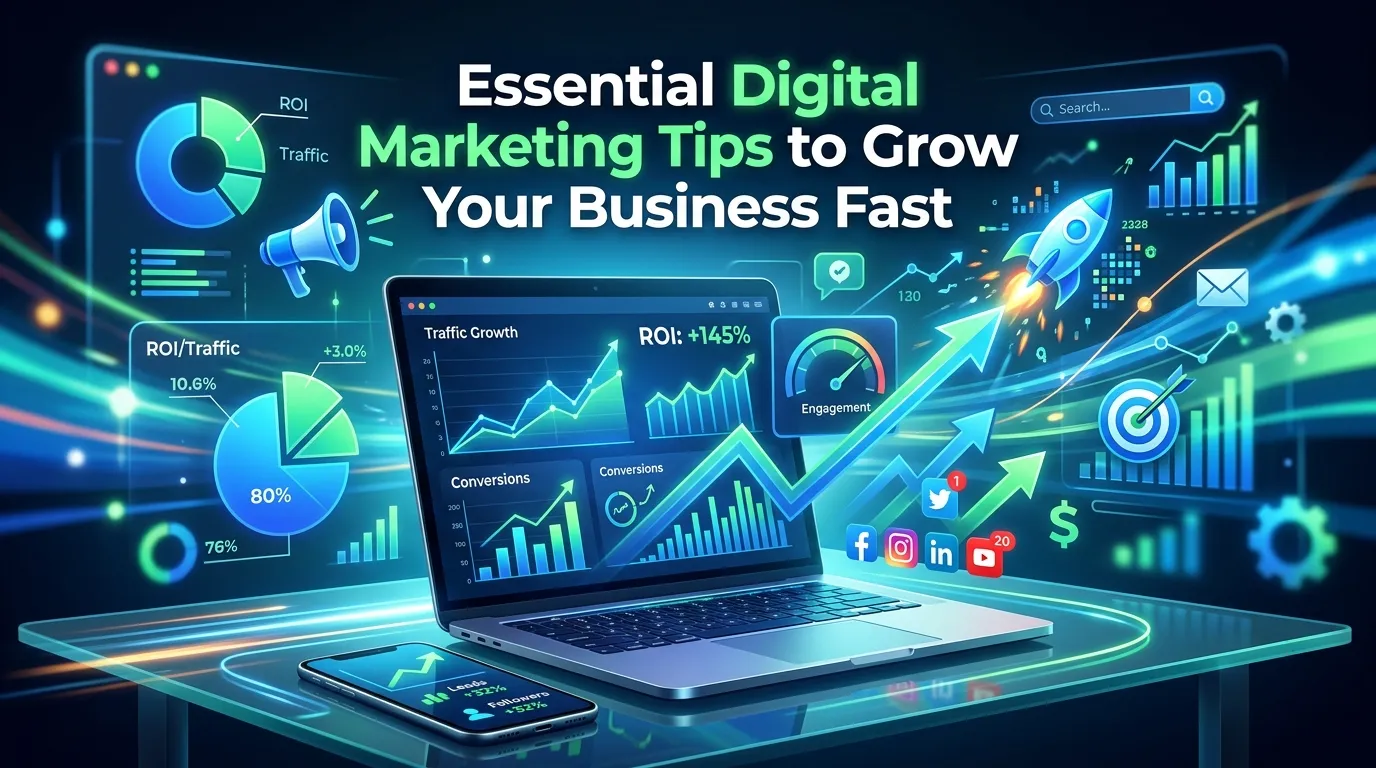
This blog shares practical digital marketing tips to improve SEO, content marketing, social media, email campaigns, PPC advertising, and analytics. It explains how businesses can attract targeted traffic, increase engagement, generate leads, and maximize long-term online revenue growth.
Digital marketing serves as the engine driving modern business growth. As consumer attention shifts entirely to digital screens, traditional advertising methods have taken a back seat. Reaching your target audience now requires a strategic, multi-channel approach. Brands that adapt to these shifting behaviors thrive, while those relying on outdated methods struggle to maintain visibility. To help you navigate this space, we have compiled a comprehensive list of digital marketing tips.
Understanding the vast digital landscape can feel overwhelming. You have algorithms updating constantly, new social platforms emerging overnight, and consumer expectations reaching new heights. However, mastering the fundamentals gives you a solid foundation to build upon. By focusing on proven digital marketing tips, you can generate consistent traffic, nurture leads, and drive meaningful conversions.
The key to success lies in integrating various digital marketing channels. Search engines, social media platforms, email networks, and paid advertising ecosystems all play distinct roles in the customer journey. When combined, they create a cohesive experience that guides a prospect from initial awareness to a loyal customer.
This comprehensive guide breaks down the core components of a successful strategy. You will discover actionable digital marketing tips across SEO, content creation, social media, email campaigns, and data analytics to help elevate your brand and maximize your return on investment.
Mastering Search Engine Optimization (SEO) Strategies
Search Engine Optimization (SEO) is the process of improving your website’s visibility on search engines like Google. Earning organic traffic requires a mix of creative content and technical precision. Applying SEO-focused digital marketing tips ensures your site ranks higher.
Search engines account for the majority of initial web journeys. By developing a deep SEO strategy, you set your business apart when customers are actively searching for answers. As part of your ongoing digital marketing tips, keep updated with algorithm changes by following credible SEO industry blogs and Google updates. Remember to refresh old blog posts with new data, update keywords based on recent trends, and monitor your competitors’ content strategies for insights you can adapt or improve.
On-Page SEO Techniques
On-page SEO involves optimizing individual web pages to rank higher and earn more relevant traffic. Start by conducting thorough keyword research to understand what your target audience is searching for online. Place these primary keywords naturally within your title tags, meta descriptions, header tags, and throughout your body copy. Avoid keyword stuffing, as search engines penalize unnatural language. Focus instead on fulfilling search intent and answering questions.
Ensure your content answers the user’s query comprehensively, using internal links to guide readers to other relevant pages on your site. This simple step is one of the most effective digital marketing tips for retaining visitors. Search engines reward websites that keep users engaged for longer periods.
Your on-page SEO efforts shouldn’t stop at written content. Optimize images by adding descriptive alt text that includes secondary or long-tail keywords where relevant. Use schema markup to help search engines understand your content’s purpose—this can improve your chances of earning coveted featured snippets in search results.
Off-Page SEO Strategies
Off-page SEO refers to actions taken outside of your own website to impact your rankings within search engine results pages. The most critical factor here is link building. Acquiring high-quality backlinks from reputable websites signals to search engines that your content is valuable and authoritative.
You can build these links through guest blogging, creating highly shareable infographics, or digital PR campaigns. Additionally, active social media profiles and positive brand mentions across the web contribute to your overall off-page SEO profile. One of our top digital marketing tips is to prioritize relationship-building with other site owners.
Building High-Quality Backlinks
Quality always matters more than quantity when it comes to backlinks. A single link from an authoritative industry blog carries more weight than dozens of links from low-quality directories. Focus your digital marketing tips and strategies on earning links organically by creating exceptional content that naturally attracts citations.
Another effective approach for acquiring high-value backlinks is to use data-driven research or unique case studies. Reporters, bloggers, and industry analysts are more likely to reference your findings if you become a trusted resource.
Technical SEO Best Practices
Technical SEO ensures that search engines can crawl and index your website without any issues. Site speed remains a major ranking factor; compress your images, leverage browser caching, and minimize heavy scripts to keep load times low. Applying technical digital marketing tips will save you from hidden ranking penalties.
Mobile responsiveness is equally critical, as most searches now occur on mobile devices. A responsive design ensures your site looks and functions perfectly on any screen size. Finally, submit a clean XML sitemap to Google Search Console and fix any broken links or 404 errors to maintain a healthy, easily navigable site structure.
Improve your technical SEO further by using structured data and canonical URLs, which help prevent duplicate content issues and ensure search engines accurately rank your core pages. Use tools like Screaming Frog or Ahrefs Site Audit to conduct regular crawls and technical health checks.
Elevating Your Brand with Content Marketing
Content forms the foundation of any successful online campaign. It fuels your SEO efforts, gives you material for social media, and provides value to your email subscribers. Strong content marketing relies heavily on solid digital marketing tips to maintain audience interest.
Content marketing is about being helpful, trustworthy, and educational. Ask yourself: what key questions do my customers have? Then create resources that answer them better than anyone else—including guides, FAQs, checklists, case studies, and testimonials. Consider the buyer’s journey in all of your content planning.
Developing a Content Strategy
A successful content marketing effort starts with a documented strategy. Begin by creating detailed buyer personas to understand your audience’s pain points, goals, and content preferences. Map out the customer journey to identify what type of content your audience needs at each stage—from top-of-funnel educational blog posts to bottom-of-funnel case studies.
Establish a content calendar to plan your publishing schedule, ensuring a consistent flow of material that aligns with product launches, seasonal trends, and broader company goals. Implementing these structural digital marketing tips keeps your team organized and focused on revenue growth.
Your strategy should also account for “evergreen” content that retains value for years as well as “timely” or seasonal content that addresses current events or upcoming trends. Track performance on each piece over time and republish high-performing assets with new information or updates when relevant.
Types of Engaging Content
Diversifying your content formats helps you reach different segments of your audience. Implementing multi-format digital marketing tips ensures you capture various learning styles:
- Long-form blog posts for SEO and establishing thought leadership.
- Video content for product demonstrations and social media engagement.
- Infographics to present complex data in an easily digestible visual format.
- Podcasts to reach audiences during their daily commutes.
- Interactive quizzes to keep your audience actively engaged with your brand.
Case studies and customer success stories build credibility and can be repurposed into short testimonials, social media posts, and graphics. Live webinars, virtual workshops, and Q&A sessions humanize your brand and position you as a thought leader in your niche.
Content Distribution and Promotion
Creating great content only solves half the battle; distributing it effectively finishes the job. Share your articles across your brand’s social media channels, using relevant hashtags to increase visibility.
Repurpose a single blog post into a Twitter thread, a LinkedIn carousel, and a short-form video for TikTok or Instagram Reels. Reach out to industry influencers or partners to share your content with their networks. Following these distribution digital marketing tips will amplify your reach significantly.
Consider paid distribution strategies, such as content discovery platforms (Outbrain, Taboola) and sponsored placements on high-traffic websites, to broaden your content’s visibility to new audiences. Don’t overlook syndication partnerships with industry publications.
Adapting Your Strategy for Maximum Revenue
To truly scale your business, you must continuously adapt your campaigns to maximize your incoming revenue. Stagnant campaigns eventually stop converting. Business owners need to evaluate their funnels, audit their current traffic sources, and embrace emerging consumer trends to stay competitive.
For a deeper dive into optimizing your digital revenue streams, check out this guide on how to adapt digital marketing to maximise revenues effectively.
One high-impact tactic is conversion rate optimization (CRO). Test landing pages, calls to action, and checkout processes using A/B and multivariate tests. Even a small uplift in conversion rate can deliver large gains in revenue over time.
Examine your sales funnel regularly to locate points of friction or abandonment. Use visitor replays and heatmaps (Hotjar, Microsoft Clarity) to spot user experience issues quickly. Regularly adjust your messaging, visuals, and offers based on test results and market feedback.
Maximizing Reach with Social Media Marketing
Social media allows you to interact directly with your customers, build brand awareness, and drive targeted traffic to your website. Implementing platform-specific digital marketing tips ensures your message resonates.
Choosing the Right Platforms
You do not need to be on every social media network to succeed. Instead, focus your resources on the platforms where your target audience actually spends their time. Knowing where to invest your time is one of the most critical digital marketing tips you can follow.
- LinkedIn: Essential for B2B companies looking to connect with decision-makers.
- Instagram: Highly visual and ideal for B2C brands targeting younger demographics.
- TikTok: Perfect for viral, short-form video content and trending audio.
- Facebook: Offers massive reach and robust community-building tools through Groups.
Evaluate emerging platforms (like Threads or Discord) regularly. Early adoption can be a competitive advantage if your target demographic migrates there.
Crafting Engaging Social Media Content
Social media users scroll quickly, so your content must capture attention immediately. Use high-quality visuals, bold graphics, and compelling hooks to stop the scroll. Encourage interaction by asking questions, running polls, and hosting giveaways.
User-generated content (UGC) provides incredible power; share photos and reviews from your customers to build social proof and trust. Always maintain a consistent brand voice, but adapt your format to suit the unique culture and technical specifications of each platform based on the latest digital marketing tips.
Use social listening tools to monitor brand mentions and trending topics in your industry—this can inspire new content and help address customer concerns in real time.
Driving Conversions Through Email Marketing
Despite the rise of new communication channels, email marketing remains one of the most effective ways to nurture leads and retain customers. Executing proper digital marketing tips in your inbox strategy yields a high return on investment.
Email marketing also facilitates automated customer journeys. Plan drip campaigns for onboarding, post-purchase engagement, re-engagement of cold leads, and loyalty program invitations. Behavioral triggers (like cart abandonment, browsing a category, or downloading a resource) help you send highly targeted messages at the optimal time.
Building an Email List
Never buy an email list; these contacts rarely show interest in your brand and can harm your sender reputation permanently. Instead, build your list organically using valuable lead magnets. Offer excellent resources like free eBooks, industry reports, discount codes, or exclusive webinars in exchange for an email address. Optimize your website with strategic pop-ups, embedded signup forms, and dedicated landing pages to capture visitor information seamlessly.
Grow your list by promoting signup opportunities across every touchpoint: within checkout flows, at events, on social channels, and via QR codes in physical stores. Always make it easy for subscribers to manage their preferences and opt out if desired.
Crafting Effective Email Campaigns
Every email you send should provide clear value to the recipient. Write compelling subject lines that create curiosity or urgency to boost your open rates. Keep the body text concise and focused on a single, clear call-to-action (CTA). Use responsive design templates so your emails look great on mobile devices. Applying segmentation digital marketing tips allows you to send targeted, highly relevant content to specific segments rather than generic newsletters.
Test various email times and formats—plain-text and video emails can sometimes outperform graphic templates. Regularly clean your list to remove disengaged or invalid addresses for improved deliverability.
Accelerating Growth with Paid Advertising (PPC)
Pay-per-click (PPC) advertising provides immediate visibility and highly measurable results, perfectly complementing your long-term organic strategies. Knowing how to bid correctly is among the best digital marketing tips for quick wins.
Advanced digital marketing tips for PPC include building custom landing pages for key ad groups, optimizing your Quality Score with tightly themed ad sets, and employing remarketing campaigns to re-engage users who visited your site but didn’t convert.
Google Ads vs. Social Media Ads
Understanding the difference between search intent and demographic targeting helps you allocate your budget efficiently.
|
Feature |
Google Ads |
Social Media Ads |
|---|---|---|
|
Primary Targeting |
Search intent (keywords) |
Demographics, interests, behaviors |
|
Best Used For |
Capturing immediate demand |
Building brand awareness and desire |
|
Cost Structure |
Pay per click (CPC) |
Pay per click or per thousand impressions (CPM) |
|
Digital Marketing Tips |
Use negative keywords to save money |
Refresh creative frequently to avoid ad fatigue |
Track campaign performance daily during the initial phase to spot major issues quickly. Test bidding strategies such as manual vs. automated bidding, and allocate extra budget toward best-performing ads for an optimal return.
Keep iterating on ad copy, images, targeting, and offers to prevent creative fatigue and maintain performance.
Leveraging Analytics and Measurement
Digital marketing provides highly measurable data. Analyzing your data ensures you spend your budget efficiently and continuously improve your results. Utilizing analytics-driven digital marketing tips prevents wasted ad spend.
Set specific KPIs for each campaign—such as cost per acquisition or email open rate—so you can determine what’s working and what needs refinement. Consider integrating all your data sources (social, email, website, Shopify, etc.) into a single dashboard (like Google Data Studio) for a unified view.
Key Performance Indicators (KPIs)
Identify the metrics that align directly with your business goals. If your goal centers around brand awareness, track metrics like website traffic, social media reach, and video views. If you focus on lead generation, monitor your conversion rate, cost per lead (CPL), and email opt-in rates. For ecommerce, track your customer acquisition cost (CAC), average order value (AOV), and overall return on ad spend (ROAS).
Drill deeper by segmenting KPIs: examine bounce rates by traffic source, average time on page by content type, or conversion rates by device. Use cohort analysis to observe how users acquired in a specific period behave over time, allowing you to optimize retention strategies.
Experiment with attribution modeling to determine which channels and touchpoints are truly driving conversions, not just last-click sales.
Exploring Automation, AI, and New Channels
Modern digital marketing is evolving rapidly with the rise of marketing automation platforms and artificial intelligence.
Marketing Automation for Smarter Workflows
Adopt marketing automation to manage recurring tasks, like welcome email series, lead scoring, or segmenting contact lists according to behavior. This not only saves you time but enables highly customized journeys that improve lead nurturing and customer satisfaction.
Use automation platforms (like HubSpot, Marketo, or Mailchimp) to track user activity in real time, trigger messages based on behavior, and integrate with your CRM for a 360-degree view of each contact.
Harnessing the Power of Artificial Intelligence
AI technology enables marketers to predict trends, personalize recommendations, and dynamically adjust bids in real time. Use AI-powered chatbots to offer instant customer support or qualify leads 24/7. Automation streamlines campaign management, and AI assistants can generate first drafts for blog posts, social captions, or even tailored product recommendations.
Predictive analytics tools analyze large data sets to forecast buyer intent, enhance segmentation, and even identify churn risks so you can act before you lose a customer.
Expanding Your Channel Mix
Don’t rely solely on search and social—explore messaging apps, podcasts, and even smart TV advertising for new reach opportunities. Partner with micro-influencers with niche audiences or consider voice search optimization by answering common questions through short-form audio or Q&A schema.
Start small by testing new channels, measuring performance, and scaling those that demonstrate the strongest ROI.
Frequently Asked Questions (FAQ)
What are the most important digital marketing tips for beginners?
Beginners should focus on building a fast, mobile-friendly website and establishing a presence on one or two social media platforms. You must also start collecting email addresses immediately to build an owned audience. Consistency in publishing content is far more important than trying to master every channel at once.
How often should I post on social media to see results?
Posting frequency depends heavily on the specific platform and your audience’s habits. Generally, aim for once a day on Instagram or Facebook, and multiple times a day on platforms like X (Twitter) or TikTok. Focus your digital marketing tips on quality and engagement rather than just hitting a daily quota.
Why is email marketing still considered an effective strategy?
Email marketing remains effective because you own your subscriber list, protecting you from sudden social media algorithm changes. It allows for highly personalized, direct communication with people who have already shown interest in your brand. Proper segmentation leads to incredible conversion rates.
What digital marketing tools do I need to get started?
You need a basic website CMS, an email marketing platform, and an analytics tool like Google Analytics. For a full breakdown of software options, review the ultimate guide to the best digital marketing tools to build your tech stack. These tools will automate your workflows and track your progress.
How long does SEO take to show actual business results?
SEO represents a long-term strategy, usually taking between three to six months to start showing significant organic traffic improvements. The timeline depends on your industry’s competitiveness, the quality of your content, and your backlink profile. Patience and consistent application of digital marketing tips are required.
Should I invest in paid advertising or organic marketing first?
A balanced approach works best. Paid advertising provides immediate traffic and data, which is crucial for testing your messaging and offers. Organic marketing builds long-term authority and lowers your overall customer acquisition cost over time. Use paid ads to bridge the gap while your organic presence grows.
What exactly is a buyer persona and why do I need one?
A buyer persona is a semi-fictional representation of your ideal customer based on market research and real data. It helps you understand their demographics, behavior patterns, motivations, and goals. Utilizing personas is one of the top digital marketing tips to ensure your messaging hits the mark.
How do I measure the return on investment (ROI) of my campaigns?
You measure ROI by tracking the specific revenue generated from a campaign against the total cost of running it. Use UTM parameters on your links and set up conversion tracking in Google Analytics. This precise tracking tells you exactly which digital marketing tips and channels are profitable.
What is content repurposing and how does it save time?
Content repurposing involves taking a large piece of content, like a blog post, and breaking it down into smaller formats. One article can become a podcast episode, an infographic, and five different social media posts. It maximizes your content’s lifespan and reinforces your digital marketing tips across platforms.
How important is video content in a modern marketing strategy?
Video content is absolutely vital, as platforms heavily favor video in their algorithms to keep users engaged. Short-form videos on TikTok and Instagram Reels capture attention quickly and build brand personality. Incorporating video is one of the most urgent digital marketing tips for modern brands.