
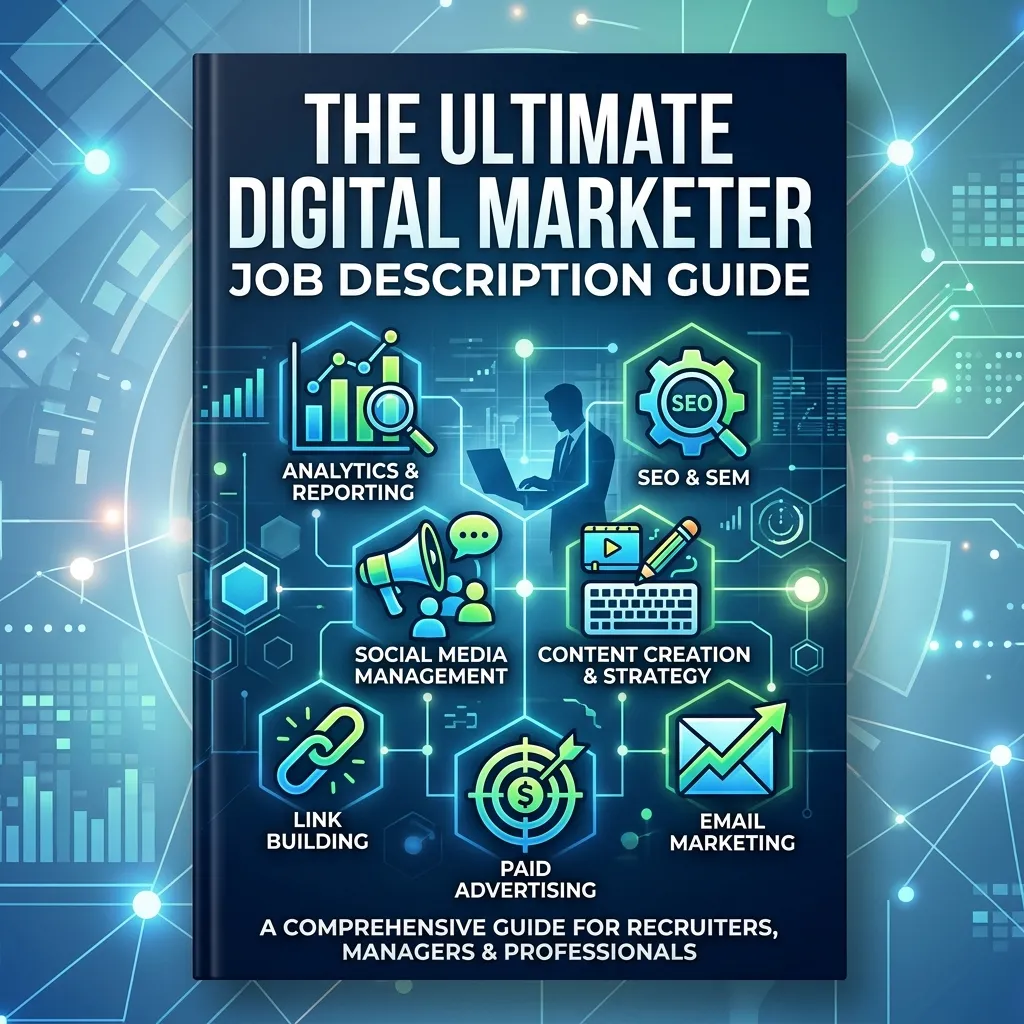
Digital marketer roles combine strategy, content creation, SEO, paid advertising, and analytics to drive online growth. The job involves managing campaigns, understanding audiences, using tools, and adapting to evolving digital marketing trends and technologies effectively.
Marketing has experienced a massive shift over the last two decades. Gone are the days when a successful campaign relied entirely on billboards, television spots, and print media. The digital landscape has rewritten the rules of engagement, creating a complex ecosystem where brands connect with consumers through screens of all sizes.
As a result, the digital marketer has become an indispensable asset for nearly every modern business. These professionals act as the bridge between a company and its online audience. They navigate ever-changing algorithms, track consumer behavior in real-time, and drive revenue through targeted online strategies.
Understanding what a digital marketer actually does can be challenging, especially since the role encompasses so many different disciplines. Whether you are a business owner looking to hire your first marketing professional, an HR manager writing a digital marketer job description, or an aspiring marketer planning your career path, you need a clear breakdown of the role. This comprehensive guide covers the core responsibilities, essential digital marketing skills, common specializations, and career trajectories associated with digital marketing roles.
Core Responsibilities in a Digital Marketer Job Description
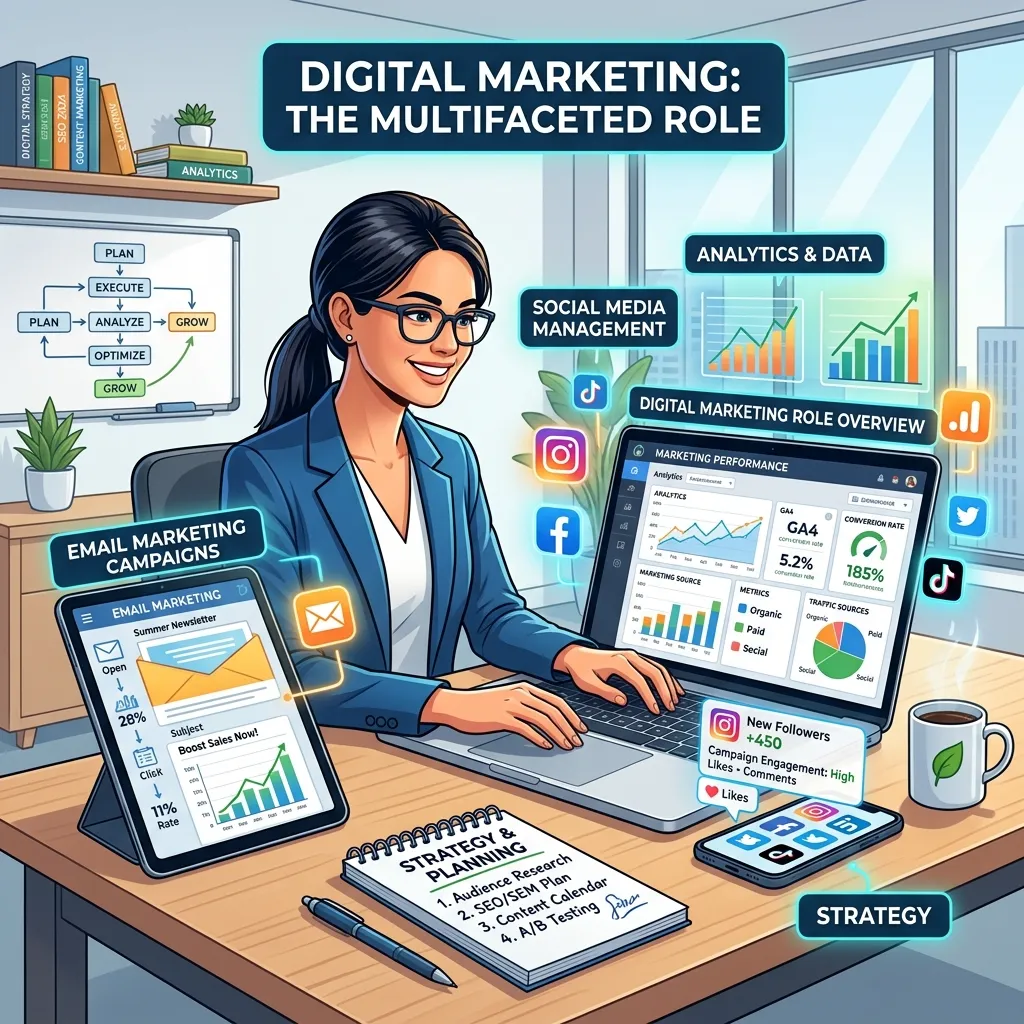
A generalist digital marketer wears many hats. While large enterprises might hire entire teams to handle specific channels, a standard digital marketing role usually involves managing a mix of the following responsibilities.
Strategy Development and Planning
Great marketing starts with a solid plan. Any comprehensive digital marketer job description must highlight strategy. Digital marketers conduct extensive market research and competitor analysis to understand their target audience. They set clear, measurable goals and Key Performance Indicators (KPIs) to track success. Managing the marketing budget also falls under this umbrella, ensuring every dollar spent yields a positive return on investment.
Content Marketing and SEO
Content is the fuel for online engagement. Digital marketers oversee the creation of various content types, including blog posts, videos, whitepapers, and infographics. They do not just create content; they strategize its distribution and promotion across different channels, ensuring it reaches the right eyes.
On-Page and Off-Page SEO
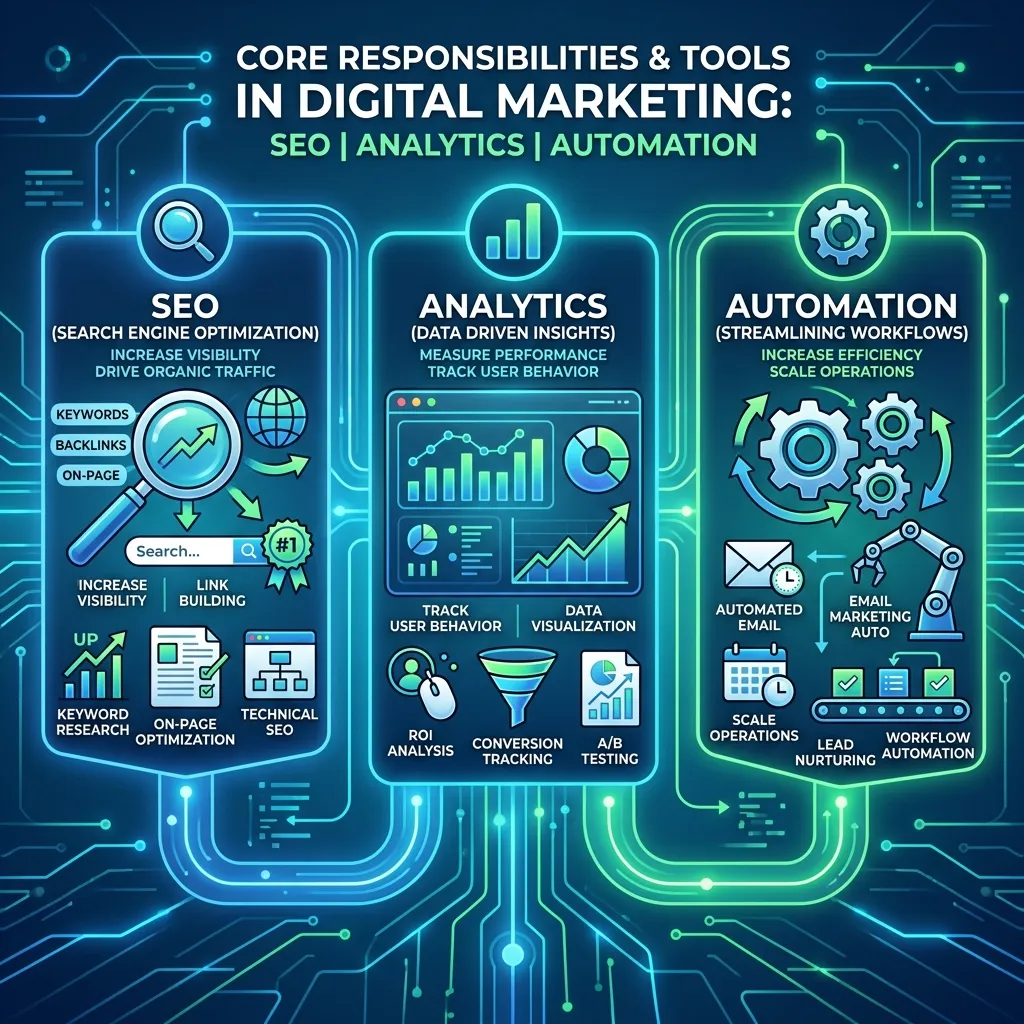
Appearing at the top of search engine results is critical for organic growth. Marketers handle both on-page SEO (optimizing content and website structure) and off-page SEO (building backlinks). They conduct keyword research to understand what potential customers are searching for and apply technical SEO basics to ensure search engines can properly crawl and index the company’s website.
Social Media and Paid Advertising (PPC)
Building a brand’s presence on platforms like LinkedIn, Instagram, and TikTok is a daily task. This involves platform management, scheduling posts, and actively engaging with followers to build a loyal community.
Pay-Per-Click advertising offers a way to generate immediate traffic. Digital marketers manage campaigns on platforms like Google Ads and various social media networks. They are responsible for:
- Writing compelling ad copy
- Selecting targeting parameters
- Managing bid budgets
- Conducting A/B testing to continuously improve the campaign’s performance
Essential Digital Marketing Skills
Succeeding in this role requires a unique blend of analytical thinking and creative flair. When crafting a digital marketer job description, you must outline both technical capabilities and strong interpersonal skills.
Technical Digital Marketing Skills
Fluency in industry-standard software is non-negotiable. Marketers must be proficient with Customer Relationship Management (CRM) software, Content Management Systems (CMS) like WordPress, and various analytics platforms. A basic understanding of HTML and CSS is incredibly beneficial, allowing marketers to make quick website tweaks without waiting on a developer. Above all, they need strong data analysis skills to translate raw numbers into actionable business strategies.
Soft Skills for Marketers
Technical knowledge can only take a campaign so far. Creativity and innovation are essential for designing campaigns that stand out in a crowded digital feed. Excellent communication and collaboration skills are required to work effectively with sales teams, designers, and company leadership. Because digital platforms change their algorithms frequently, adaptability and a commitment to continuous learning represent the most important digital marketing skills a professional can have.
Exploring Digital Marketing Roles and Specializations
As businesses grow, they often transition from hiring generalists to employing specialists. Outlining these specific digital marketing roles helps you clarify your exact hiring needs.
If you want to understand the exact daily workflow,
you can review the detailed Marketing Specialist Duties directly.
This gives a realistic look at their routine.
Overview of Specialized Positions
The digital marketing landscape is vast. Here is a breakdown of how different digital marketing roles compare regarding focus and required skills.
|
Role Title |
Primary Focus |
Key Digital Marketing Skills |
|---|---|---|
|
SEO Specialist |
Organic search rankings and traffic |
Keyword research, technical audits, link building |
|
Content Manager |
Brand voice and editorial strategy |
Copywriting, editing, creative direction |
|
Social Media Manager |
Community building and brand awareness |
Trend analysis, community engagement, design |
|
PPC Specialist |
Paid advertising and lead generation |
Budget management, A/B testing, data analysis |
|
Marketing Analyst |
Performance tracking and reporting |
Google Analytics, SQL, data visualization |
Qualifications and Career Path
The path to becoming a digital marketer is rarely linear. While formal education provides a strong foundation, practical experience often carries the most weight during the hiring process.
Academic Background vs. Practical Experience
Many employers look for a bachelor’s degree in marketing, communications, business, or a related field. However, specific industry certifications are increasingly valued. Credentials from Google, HubSpot, or Meta demonstrate a candidate’s up-to-date knowledge of current platforms.
A strong portfolio can easily outweigh a formal degree. Hiring managers look for candidates with hands-on experience, often gained through internships, personal blogs, or freelance projects. Demonstrating a track record of growing a social media following or ranking a website on Google’s first page provides tangible proof of a candidate’s abilities.
Entry-Level to Leadership
Digital marketing offers a robust and upward-trending career trajectory. The field rewards performance, allowing talented individuals to advance quickly.
- Entry-Level: Marketing Coordinator, SEO Assistant. These roles involve supporting senior staff and learning platform mechanics.
- Mid-Level: Digital Marketing Specialist, SEO Manager. Professionals take ownership of specific channels and direct strategy.
- Senior-Level: Director of Digital Marketing, Chief Marketing Officer (CMO). Executives focus on high-level strategy and managing large teams.
How to Write an Effective Digital Marketer Job Description
If you are tasked with hiring a marketing professional, a well-written digital marketer job description is your first filter for top talent.
Key Components to Include
Start with a clear, engaging summary of your company and the role. List the exact Marketing Specialist Duties the candidate will manage daily. Clearly separate the “must-have” technical skills from the “nice-to-have” bonuses. Outline the required experience level and mention any specific software tools your company currently uses.
Tailoring to Specific Business Needs
A B2B enterprise software company needs a very different marketer than a direct-to-consumer fashion brand. Tailor the digital marketer job description to highlight your industry. If you need someone heavily focused on lead generation via LinkedIn and email, state that clearly rather than posting a generic list of marketing duties. Top-tier marketers know their worth. To attract them, highlight your company culture, professional development opportunities, and the specific impact this role will have on the business.
The Future of Digital Marketing: AI, Automation, and Data-Driven Growth
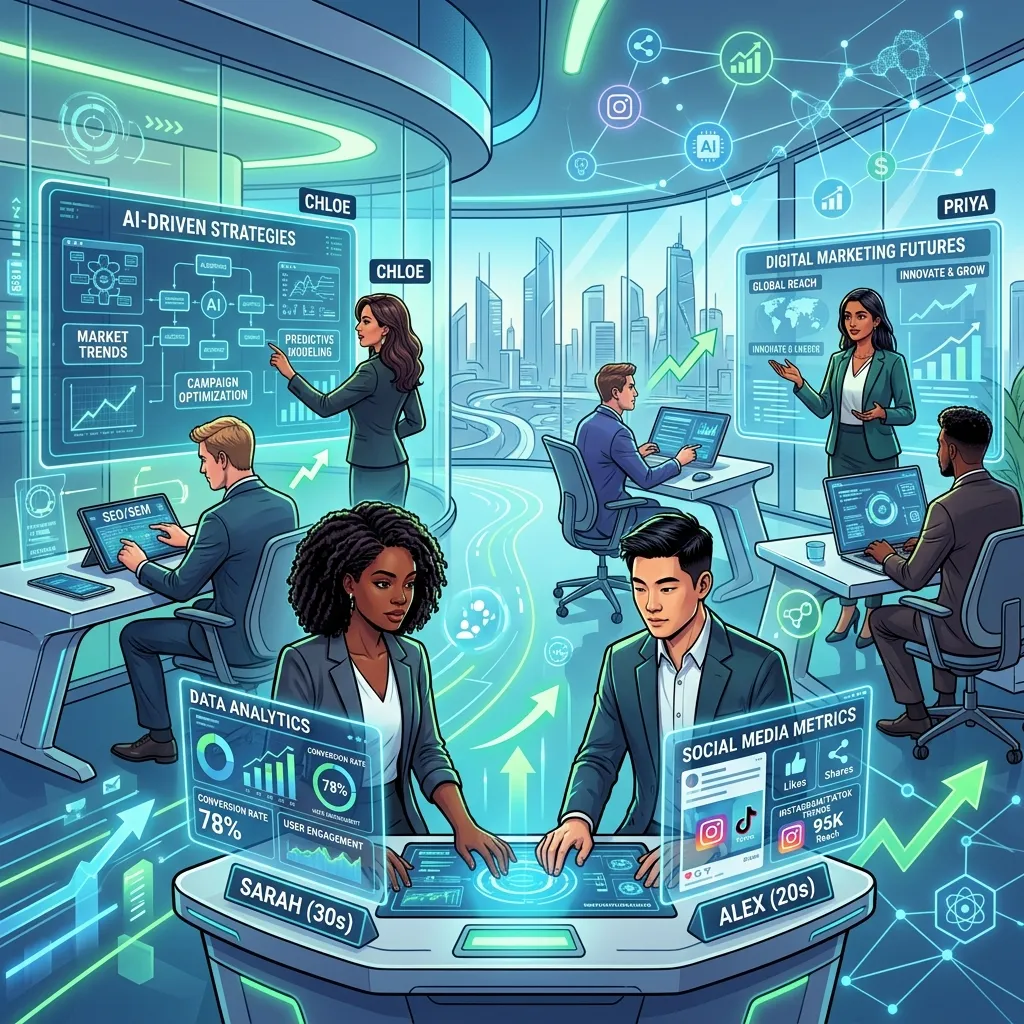
Digital marketing is no longer just about posting content or running ads—it is rapidly evolving into a highly intelligent, automated, and data-driven ecosystem. As technology advances, the role of the digital marketer is also shifting from manual execution to strategic decision-making powered by insights, automation tools, and artificial intelligence. Understanding these future trends is essential for anyone entering or working in digital marketing roles.
1. Rise of AI-Powered Marketing
Artificial intelligence is transforming how campaigns are created, optimized, and delivered. Modern digital marketers now rely on AI tools to analyze customer behavior, predict trends, and personalize content at scale. From automated email campaigns to AI-generated ad copy and chatbots, AI reduces manual workload while improving accuracy and performance. This shift allows marketers to focus more on strategy and creativity rather than repetitive tasks.
2. Hyper-Personalization of Customer Experience
Customers now expect highly personalized experiences across all digital platforms. Instead of generic messaging, brands are using data analytics to deliver tailored content based on user behavior, preferences, and purchase history. Digital marketers play a key role in segmenting audiences and designing personalized journeys that increase engagement, conversions, and long-term loyalty.
3. Growth of Marketing Automation Tools
Automation has become a core part of modern digital marketing workflows. Tasks such as email marketing, social media scheduling, lead nurturing, and ad optimization are now handled by automated systems. This not only improves efficiency but also ensures consistency in campaign execution. Marketers must now understand how to configure and manage automation platforms effectively.
4. Data-Driven Decision Making
Future-ready digital marketers depend heavily on data to guide every decision. Instead of relying on intuition, they analyze performance metrics such as conversion rates, customer acquisition costs, and engagement levels. Advanced analytics tools and dashboards help marketers identify what works and quickly eliminate underperforming strategies, making campaigns more profitable over time.
5. Shift Toward Omnichannel Marketing
Consumers interact with brands across multiple platforms—search engines, social media, email, websites, and mobile apps. Digital marketers must ensure a seamless experience across all these channels. Omnichannel marketing focuses on delivering consistent messaging and branding wherever the customer interacts, improving trust and recognition.
6. Importance of Video and Interactive Content
Video content continues to dominate digital platforms, with short-form videos, live streams, and interactive content gaining massive popularity. Marketers must now think beyond static posts and incorporate engaging formats like reels, polls, quizzes, and interactive ads to capture user attention in a highly competitive environment.
7. Increasing Focus on Privacy and Ethical Marketing
With stricter data privacy laws and growing consumer awareness, ethical marketing has become a major priority. Digital marketers must ensure transparency in data collection, respect user privacy, and comply with regulations like GDPR and other data protection standards. Building trust is now just as important as driving conversions.
8. Evolution of SEO and Search Behavior
Search engines are becoming more intelligent, focusing on user intent rather than just keywords. Voice search, visual search, and AI-driven search results are changing how content is discovered. Digital marketers must adapt SEO strategies to focus on high-quality, intent-based content rather than keyword stuffing.
This future-focused shift shows that the role of a digital marketer is becoming more strategic, analytical, and technology-driven than ever before. Those who adapt to these changes will not only stay relevant but also lead the next wave of digital transformation.
Frequently Asked Questions
What should be included in a digital marketer job description?
A comprehensive digital marketer job description should include a summary of the company, a list of daily responsibilities, required digital marketing skills, and specific tools used. It must also outline the reporting structure and clarify whether the role focuses on specific channels like SEO, social media, or paid advertising.
What are the main Marketing Specialist Duties?
Marketing Specialist Duties typically include conducting market research, planning campaign strategies, managing social media accounts, and optimizing website content for search engines. They also analyze performance metrics to adjust budgets and ensure marketing efforts align with broader company revenue goals.
Which digital marketing skills are most important for beginners?
Entry-level candidates should focus on developing core digital marketing skills like basic copywriting, understanding Google Analytics, and familiarizing themselves with social media platform algorithms. Strong communication, adaptability, and a willingness to learn technical software rapidly are equally crucial for beginners.
How do digital marketing roles differ from traditional marketing?
Digital marketing roles focus entirely on online channels like search engines, email, and social media, allowing for real-time data tracking and highly targeted audience segmentation. Traditional marketing relies on broader, less measurable offline channels like print media, radio, and television broadcasting.
Do you need a degree to get a digital marketer job?
While a degree in marketing or communications is helpful, it is not strictly mandatory to secure a digital marketing role. Many successful professionals are self-taught, relying on industry certifications from Google or HubSpot and building strong personal portfolios to prove their digital marketing skills to employers.
What is the difference between an SEO Specialist and a PPC Specialist?
An SEO Specialist focuses on improving a website’s organic, unpaid ranking on search engines through content and technical optimizations. A PPC Specialist manages paid advertising budgets, creating ads that appear at the top of search results and paying a fee every time a user clicks on them.
How do I tailor a digital marketer job description for a startup?
When writing a digital marketer job description for a startup, emphasize the need for a versatile “full-stack” marketer who can handle multiple channels independently. Highlight the fast-paced environment, the opportunity for rapid career growth, and the ability to directly impact the company’s foundational strategies.
What soft skills should I look for in digital marketing roles?
The best candidates for digital marketing roles possess strong problem-solving abilities, high emotional intelligence, and excellent written communication. Because the digital landscape changes rapidly, look for individuals who demonstrate intense curiosity, adaptability, and a proactive approach to continuous learning.
How much coding knowledge does a digital marketer need?
A general digital marketer does not need to be a software engineer, but basic knowledge of HTML and CSS is highly valuable. Understanding how web pages are structured helps marketers format blog posts, troubleshoot minor tracking code issues, and communicate more effectively with web development teams.
What career advancement opportunities exist in digital marketing?
Professionals typically start in coordinator roles and advance into specialized management positions within a few years. With proven success in driving revenue and leading teams, marketers can eventually step into director-level roles or become a Chief Marketing Officer guiding the entire organization’s strategic vision.