


In today’s digital landscape, monetizing online content through affiliate partnerships has become an essential revenue stream for bloggers, influencers, and businesses alike. Affiliate link optimization is no longer an optional tactic; it is a strategic requirement to ensure that every click, impression, and referral counts toward sustainable earnings.
By integrating best practices for keyword research, link placement, content quality, technical performance, and continuous refinement, you can transform scattered affiliate promotions into a cohesive, high-converting system. This guide walks you through the entire process in detail, offering actionable steps you can implement today. Whether you’re launching your first affiliate page or refining an established site, mastering affiliate link optimization will help you attract highly qualified visitors, foster trust, and maximize commission potential.
In-Depth Keyword Research for Effective Affiliate Link Optimization
At the core of every successful affiliate link optimization strategy is targeted keyword research. Choosing the right search terms ensures that you capture audiences who are ready to compare products, read detailed reviews, and ultimately make a purchase. Begin by identifying buyer-intent keywords that include modifiers such as “best,” “review,” “coupon,” “discount,” and “vs.” These terms signal strong purchase motivation and often deliver higher click-through rates.
Leverage advanced tools to uncover search volumes, competition levels, and long-tail variations. Platforms like Ahrefs and SEMrush provide in-depth metrics, while Google Keyword Planner helps you estimate monthly traffic potential. Document your findings in a structured spreadsheet, grouping keywords by topic, search intent, and difficulty score. Aim for medium-volume phrases—those with roughly 1,000 to 5,000 searches per month—and difficulty ratings below 40 to strike a balance between rapid ranking potential and meaningful traffic.
Competitor analysis plays a crucial role in pinpointing gaps in the market. Identify top-ranking pages within your niche, examine their keyword targeting and content depth, and look for opportunities where you can offer richer insights or more up-to-date data. By reverse-engineering competitor strategies, you gain a roadmap for creating more comprehensive articles that resonate with both search engines and readers. This proactive research phase lays the foundation for sustained growth in your affiliate link optimization efforts.
Finally, refine your keyword list through ongoing monitoring. As you publish content and gather analytics data, periodically revisit your spreadsheet to add emerging phrases, drop underperforming terms, and adjust for seasonal trends. A dynamic approach to keyword management ensures that your affiliate pages remain aligned with user intent and evolving search patterns.
Strategic Placement and Cloaking of Affiliate Links
![[object Object]](https://seobulb.link/wp-content/uploads/2026/05/maximizing-revenue-with-affiliate-link-optimizatio-image-1.webp)
Once you have your target keywords defined, the next step in affiliate link optimization is to embed links in a way that feels natural, trustworthy, and valuable. Poorly placed or excessively visible affiliate URLs can look spammy, causing readers to bounce. Instead, opt for contextual integration. Reference products or services within the narrative of your content, then link relevant anchor text directly to your affiliate partner. This creates a seamless user experience and encourages genuine engagement.
Adding clear call-to-action prompts can significantly boost click-through rates. Phrases like “Click here to view the latest pricing” or “Read our full hands-on review” help users understand exactly what to expect when they follow your link. Position these CTAs near key decision points in your content—such as after listing benefits, or summarizing a pros and cons section—to capitalize on the moment your reader is most interested.
Link cloaking not only improves aesthetics but also aids in link management and performance tracking. By redirecting long, complex affiliate codes through your own domain—using simple structures like yoursite.com/go/product—you retain brand consistency and gain greater control over redirects. Always comply with search engine and regulatory guidelines by adding rel=”sponsored” or rel=”nofollow” attributes to your affiliate links, as recommended by the Federal Trade Commission (FTC). This ensures transparency while preventing unwanted link equity leakage.
Effective affiliate link optimization hinges on balancing visibility with discretion. By implementing contextual links, clear CTAs, cloaked redirects, and compliant attributes, you can build trust, improve usability, and maximize the number of qualified clicks sent to your affiliate partners.
Creating High-Value, SEO-Friendly Content
Content quality is the lifeblood of affiliate link optimization. Search engines reward comprehensive, well-structured pages that satisfy user intent, while readers appreciate depth, clarity, and authenticity. Begin each article with a clear, concise title that incorporates your primary focus keyword—Affiliate Link Optimization—and a meta description that teases the value visitors will receive.
Within the body, aim for in-depth reviews and comparisons that cover essential features, pricing tiers, pros and cons, and real-world use cases. Incorporate visuals—such as labeled screenshots, high-resolution product photos, and comparison tables—to break up dense text and bolster engagement. Infographics can convey complex data succinctly and encourage social sharing, further amplifying your reach.
On-page SEO best practices serve as a blueprint for content structure. Use your focus keyword in the H1, at least one H2 subheading, and naturally scattered throughout body copy. Sprinkle in related LSI terms—such as “performance evaluation,” “user testimonials,” or “discount code options”—to enhance topical breadth. Don’t overlook structured data: implementing Review Snippet schema in JSON-LD format can display star ratings and price details directly in search results, boosting click-through rates.
Finally, maintain readability to appeal to a broad audience. Break text into short paragraphs, use bullet lists where appropriate, and write at a level that scores above 60 on the Flesch Reading Ease test. By marrying in-depth analysis with clear presentation, you elevate both SEO performance and the user experience, ensuring your affiliate pages rank well and convert effectively.
Enhancing Technical SEO for Affiliate Pages
![[object Object]](https://seobulb.link/wp-content/uploads/2026/05/maximizing-revenue-with-affiliate-link-optimizatio-image-2.webp)
Technical considerations can make or break your affiliate link optimization strategy. No matter how compelling your content is, slow load times and crawl issues will deter both users and search engine bots. Adopt a mobile-first design approach to ensure responsive layouts, intuitive navigation, and lightning-fast performance on smartphones and tablets, where a majority of traffic originates.
Optimize page speed by compressing and lazy-loading images, minifying CSS and JavaScript files, and leveraging browser caching. Strive for a Core Web Vitals score that meets the “Good” threshold by monitoring metrics such as Largest Contentful Paint (LCP) and Cumulative Layout Shift (CLS). For authoritative guidance on performance best practices, consult the National Institute of Standards and Technology (NIST).
Ensure all affiliate pages are indexed correctly by including them in your XML sitemap and verifying that your robots.txt file does not inadvertently block them. Use canonical tags to prevent duplicate content issues—especially important when you have multiple review posts for similar products. Implement HTTPS site-wide with a valid SSL certificate to build trust and avoid “Not Secure” warnings that could scare away potential buyers.
By systematically addressing performance, indexing, and security, you create a technical foundation that supports robust affiliate link optimization. In today’s digital landscape, a seamless user journey from click to conversion is paramount.
Continuous Monitoring and Refinement of Your Strategy
Affiliate link optimization is not a set-and-forget tactic; it demands ongoing analysis and adjustment. Set up conversion goals in Google Analytics or your preferred analytics platform to track key events such as link clicks, scroll depth, and form submissions. This data provides insight into which pages drive the most engagement and where visitors drop off.
Visual tools like heatmaps and session recordings from platforms such as Hotjar reveal user behavior patterns that might not show up in traditional metrics. Identify areas of your page that attract the most clicks and consider relocating underperforming CTAs or affiliate banners to those hotspots.
A/B testing is another invaluable component. Experiment with different anchor text, button colors, link placements, and CTA phrasing to determine which combinations yield the highest conversion rates. Rotate your experiments frequently and document the results so that your affiliate link optimization process becomes a data-driven cycle of improvement.
Regularly review performance reports provided by your affiliate networks to see which offers, products, or merchants generate the best CTR and EPC (earnings per click). Use these insights to prioritize new content topics and update existing posts with fresh imagery, revised statistics, and stronger calls to action. By fostering a culture of continuous refinement, you ensure that your affiliate ecosystem remains agile, relevant, and highly profitable.
Advanced Conversion Tactics for Affiliate Link Optimization
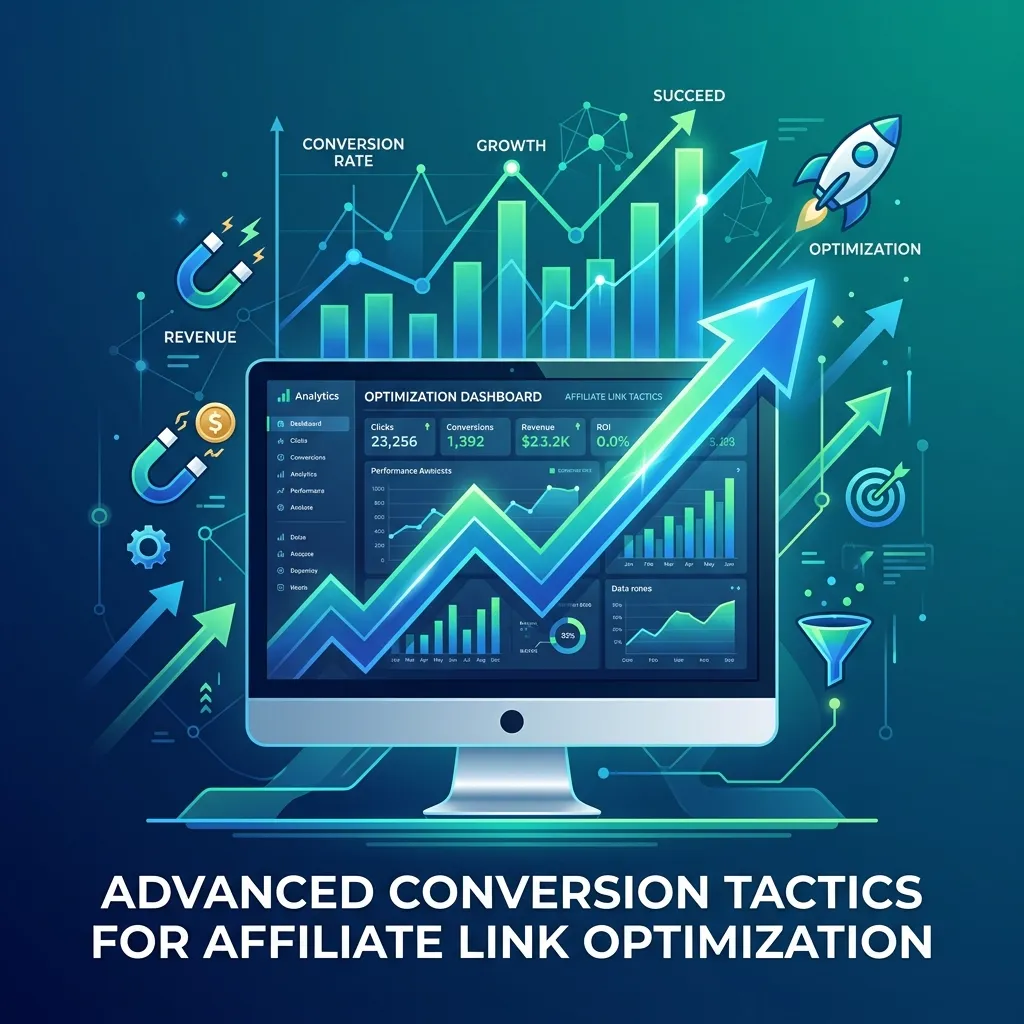
Improving traffic is only half the equation—real success comes from turning that traffic into consistent affiliate revenue. This is where advanced affiliate link optimization techniques play a crucial role. By focusing on user psychology, trust-building elements, and conversion-focused design, you can significantly increase the percentage of visitors who actually click and purchase through your links.
Use Psychological Triggers to Increase Clicks
- Highlight urgency with phrases like “limited-time offer” or “today only discount.”
- Use scarcity indicators such as “only a few left in stock” to encourage faster decisions.
- Add social proof like “trusted by 10,000+ users” or verified customer reviews.
- Position affiliate links near emotional decision points in your content.
- Combine benefits-driven language with product recommendations for stronger persuasion.
Improve Link Visibility Without Being Spammy
- Use well-designed buttons instead of plain text links for important CTAs.
- Place affiliate links above the fold for high-intent readers.
- Repeat key links naturally within long-form content sections.
- Use contrasting colors to make buttons stand out visually.
- Ensure spacing and layout guide the reader’s eye toward the link naturally.
Build Trust Before Promoting Any Affiliate Product
- Always provide honest pros and cons before inserting affiliate links.
- Include real-world use cases instead of generic product descriptions.
- Disclose affiliate relationships clearly to maintain transparency.
- Link to authoritative external sources to support claims.
- Avoid overloading pages with too many affiliate offers, which can reduce credibility.
Optimize Content Flow for Maximum Conversions
- Start with educational value before introducing affiliate recommendations.
- Use comparison tables to help readers make faster decisions.
- Place affiliate links after explaining key benefits or solutions.
- Break content into digestible sections so users stay engaged longer.
- Guide readers step-by-step toward the final buying decision.
Data-Driven Refinement for Better Results
- Track which affiliate links generate the highest clicks and conversions.
- Test different anchor texts such as “best deal,” “learn more,” or “buy now.”
- Experiment with link placement in different sections of your article.
- Analyze the bounce rate to identify low-converting pages.
- Continuously update content based on performance insights.
By applying these targeted strategies, your overall affiliate link optimization approach becomes more structured, persuasive, and profitable. Instead of simply placing links within content, you are strategically engineering every element of your page to guide users toward action—resulting in higher engagement, stronger trust, and improved affiliate earnings over time.
Frequently Asked Questions About Affiliate Link Optimization
Conclusion
Mastering affiliate link optimization requires a holistic approach that spans keyword research, strategic link placement, compelling content creation, technical excellence, and relentless performance monitoring. By weaving the focus keyword—Affiliate Link Optimization—throughout every page and aligning your tactics with user intent, you can attract qualified traffic and guide readers toward conversion points seamlessly.
As you implement the strategies outlined in this guide, remember that success in affiliate marketing comes from persistent testing and iterative enhancements. Audit your top posts today, apply quick wins in keyword targeting and link positioning, and schedule regular reviews to keep your content fresh and technically sound. With consistent effort and data-driven decisions, your affiliate site will transform into a predictable revenue engine that thrives in today’s competitive digital landscape.