

A certified digital marketing professional gains structured expertise in SEO, PPC, social media, analytics, and strategy. Certification enhances career opportunities, credibility, and earning potential while ensuring up-to-date skills for managing modern data-driven marketing campaigns effectively.
Marketing dynamics shift rapidly, demanding constant adaptation from professionals who want to stay relevant. You cannot rely purely on instinct to navigate complex algorithms, fragmented audience attention, and data privacy regulations. A structured, comprehensive understanding of digital channels is no longer optional—it is a fundamental requirement for business success.
Earning your credential as a certified digital marketing professional provides that exact structure. This certification serves as a clear indicator to employers and clients that you possess the technical skills and strategic acumen required to execute profitable marketing campaigns. By reading this comprehensive guide, you will learn exactly what the certification entails, how to select the best program for your specific goals, and how mastering these skills translates into long-term career growth.
The Evolution of Digital Marketing
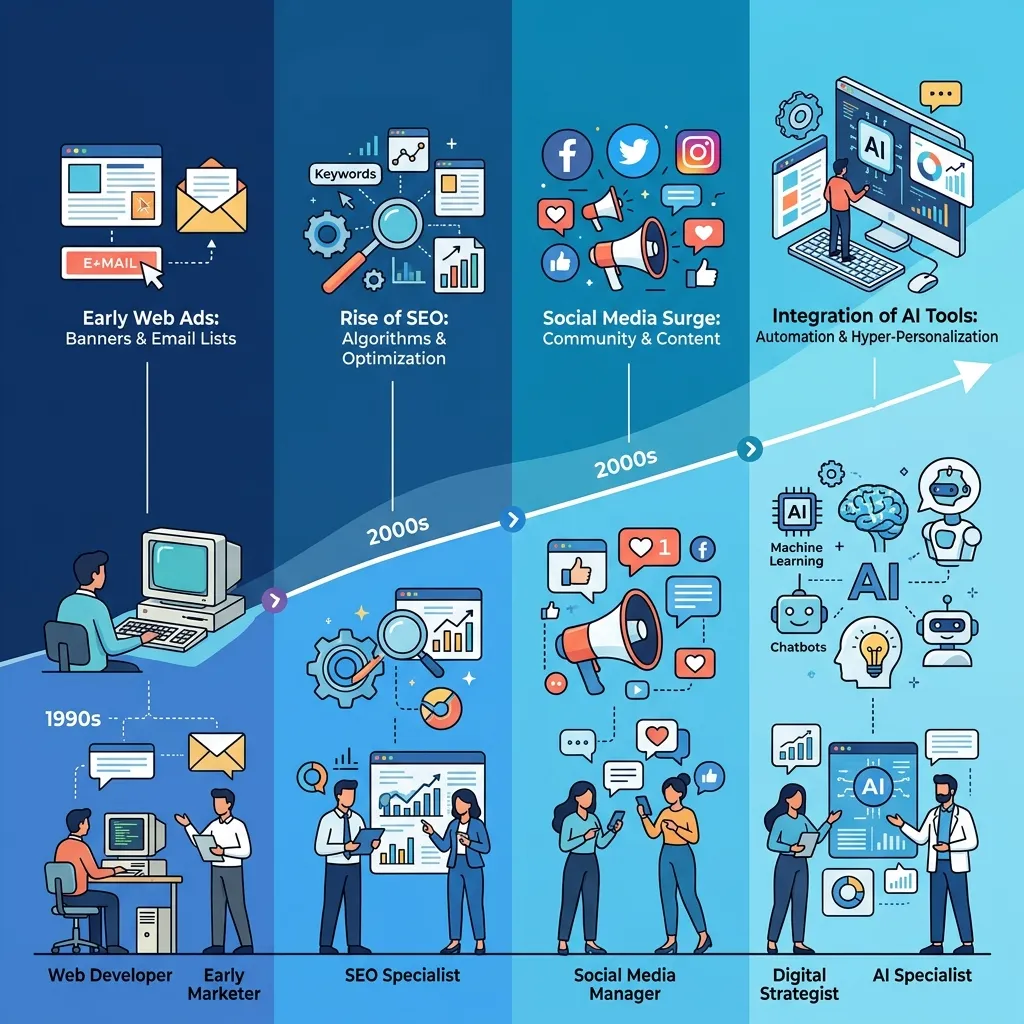
The marketing industry has undergone a massive transformation, moving far beyond billboards, print ads, and television commercials. As consumer behavior shifts entirely online, organizations must adapt or face irrelevance. Every year, the digital landscape introduces new channels, prioritizes emerging platforms, and redefines what it means to connect with audiences—heightening the urgency for professionals to acquire recognized, up-to-date credentials.
From Traditional to Digital: A Paradigm Shift
Traditional marketing relied on broad distribution and hoped for the best. You would buy a magazine ad and guess how many people actually took action based on it. Digital marketing introduced precision targeting, real-time analytics, and interactive communication. Instead of broadcasting a single message to a massive audience, organizations can now tailor highly specific campaigns to granular user segments. This shift means modern marketers must be both creative thinkers and data analysts.
What makes digital marketing so potent is the seamless blend of creativity and technology. Real-time analytics allow for constant optimization, stretching budgets further and achieving better ROI than passive traditional channels could ever manage. Marketers can A/B test everything from ad copy to landing pages, interpret funnel analytics on the fly, and dynamically reallocate resources based on what’s working at that very moment.
For a foundational look at these concepts, check this resource: Understand the core definition of digital marketing here to see how the landscape has evolved.
Key Digital Marketing Channels and Their Impact
A robust strategy leverages multiple interconnected channels to capture consumer attention at various stages of the buying journey. The ability to synchronize messaging and intent across platforms is a defining feature of an effective digital marketing program.
- Search Engine Optimization (SEO): Drives long-term organic visibility by aligning website content with search engine algorithms. SEO is not just about keywords anymore; it’s about creating valuable content, optimizing for mobile, and building a technically robust web presence.
- Pay-Per-Click (PPC) Advertising: Generates immediate traffic through sponsored placements on search engines and partner websites. PPC strategies use behavioral data and predictive analytics to ensure the right viewer sees the right message at the right time.
- Social Media Marketing: Fosters community engagement and brand loyalty across various social networks. Social media is no longer just about posting updates—today, it’s a pivotal driver of customer support, influencer campaigns, user-generated content, and social commerce.
- Email Marketing: Nurtures leads down the sales funnel through personalized, direct communication. Automation and segmentation now allow for highly sophisticated campaigns that reflect where a user is in their journey.
When aligned correctly, these channels create a compounding effect that maximizes overall return on investment (ROI). A certified digital marketing professional understands how to orchestrate these elements seamlessly, blending storytelling with metrics to guide decision-making.
The Rise of Omnichannel Strategy
One of the biggest developments in digital marketing is the shift toward omnichannel strategies. Rather than relying on isolated tactics, today’s marketing efforts are increasingly integrated. This enables brands to maintain a consistent voice—from awareness-building on social platforms to nurturing customer loyalty through retargeting and email sequences. Certified professionals are trained to build and execute these holistic approaches, ensuring all touchpoints move users closer to conversion.
The Need for Specialized Skills in a Dynamic Field
Because digital platforms frequently update their algorithms and policies, generalist marketing knowledge quickly becomes outdated. Organizations require specialists who understand the nuances of technical SEO, the bidding strategies of Google Ads, and the compliance requirements of data privacy laws like GDPR. A certified digital marketing professional fills this exact gap, bringing up-to-date expertise to complex business challenges.
Moreover, employers increasingly expect marketing hires to demonstrate proficiency across analytics, automation, and content creation tools. Certification programs don’t just teach general strategy; they provide hands-on experience with industry-leading platforms and foster the critical thinking required for fast-paced digital environments.
Benefits of Becoming a Certified Digital Marketing Professional
Investing time and money into a comprehensive certification program yields significant professional dividends. The title of certified digital marketing professional is not just a badge; it is a gateway to elevated career opportunities.
Enhanced Career Opportunities and Salary Potential
Specialized knowledge commands a premium in the job market. Certified professionals frequently report higher starting salaries and faster promotion trajectories compared to their uncertified peers. Employers view the certified digital marketing professional designation as a guarantee of competence. When you hold this credential, hiring managers immediately recognize that you have undergone rigorous, standardized training, making you highly attractive for senior-level management roles.
Notably, many job postings for digital marketing managers now explicitly require or prefer candidates with industry-recognized certification. Whether you’re transitioning into the industry or seeking a promotion, a credential signals that you’re invested in your continued learning and ready to take on increased responsibility.
Additionally, certification broadens your geographical job market. Professional credentials are globally recognized, making it easier to work with multinational organizations or agencies serving international clients.
Validation of Expertise and Credibility
A credential acts as third-party validation of your skills. When pitching services to a new client or presenting a strategy to an executive board, operating as a certified digital marketing professional establishes immediate trust. It proves that your knowledge is grounded in industry-standard practices rather than guesswork.
Clients and employers alike want to minimize risk—certification provides that reassurance. In freelance and consulting environments, a CDMP or its equivalent could be the deciding factor that sets you apart from other candidates.
Staying Ahead in a Competitive Market
The digital landscape is intensely competitive. Securing a certification forces you to learn the latest methodologies and tools. This continuous education ensures that your skill set remains sharp. As a certified digital marketing professional, you can execute campaigns that significantly outperform competitors who still rely on outdated tactics.
Professional certification also encourages critical thinking and adaptability—skills that are crucial as digital marketing continues to morph with the introduction of new platforms, technologies, and trends. Program alumni routinely note that the rapid update cycles embedded in certification curricula keep them on the cutting edge.
Networking Opportunities and Industry Recognition
Certification programs often include access to exclusive alumni networks, forums, and events. Connecting with another certified digital marketing professional opens doors for mentorship, collaborative partnerships, and unadvertised job opportunities. These networks become invaluable resources as you navigate your career trajectory.
Active participation in post-certification events and networks can sustain your learning for years. Peer groups are excellent sounding boards for troubleshooting new advertising platforms or seeking feedback on campaign strategy, making the investment in a program even more impactful over time.
Core Components of a Certified Digital Marketing Professional Curriculum
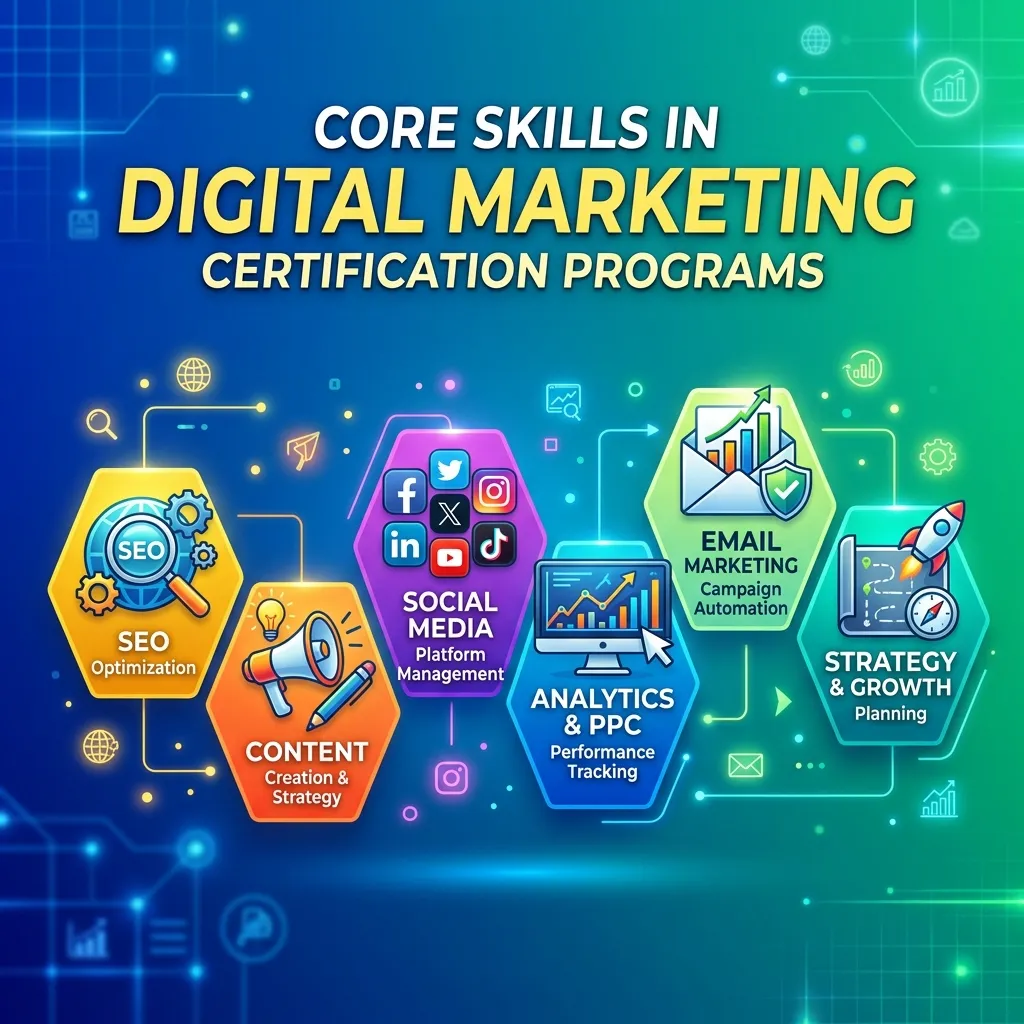
A high-quality certification program covers the entire spectrum of modern digital marketing. When you study to become a certified digital marketing professional, you will master several critical disciplines.
Search Engine Optimization (SEO)
You will learn how to optimize website architecture, conduct comprehensive keyword research, and build authoritative backlinks to improve organic search rankings. A certified digital marketing professional knows how to balance technical site health with high-quality content creation.
The curriculum typically dives into on-page, off-page, and technical SEO best practices. Students complete hands-on exercises auditing websites, identifying technical issues impacting crawlability or indexation, and executing strategies to improve rankings. Algorithm updates, voice search optimization, and content-first strategies will also be covered, ensuring your SEO knowledge is never stagnant.
Pay-Per-Click (PPC) Advertising
Programs cover the mechanics of paid search and display networks. You will learn how to manage budgets, optimize ad copy, and lower your cost-per-acquisition (CPA). A certified digital marketing professional can navigate complex bidding environments to ensure maximum ROI for every dollar spent.
PPC modules emphasize data-driven decision making—teaching students to set campaign objectives, perform keyword research, analyze competitor ads, and maximize the use of AI-powered bid strategies. Display ad creative testing, negative keyword management, and multi-channel retargeting techniques are all part of robust certification syllabi.
Social Media Marketing (SMM)
This component explores community building, organic content strategy, and paid social advertising across platforms like LinkedIn, Meta, and TikTok. You will discover how a certified digital marketing professional utilizes audience segmentation to deliver highly relevant social content.
Students design calendars, create cross-platform campaigns, respond to user engagement and measure the efficacy of their social strategies using built-in analytics tools. Modules often touch on reputation management, crisis response, and influencer partnership best practices—versatile skills for agencies and brands alike.
Content and Email Marketing
You will discover how to create valuable, relevant content that attracts and retains a clearly defined audience. Furthermore, curricula detail list segmentation, automation workflows, and A/B testing to maximize open rates and conversions.
Certifications instruct you in developing editorial calendars, optimizing copywriting for SEO, creating video and interactive content, and using analytics to refine content strategies. Email marketing lessons start with compliance and list hygiene before moving on to automation tools, behavioral triggers, and complex nurtures that mature leads over time.
Website Analytics and Data Interpretation
Understanding data is critical. You will learn to navigate platforms like Google Analytics 4 (GA4) to track user behavior and measure campaign success. A certified digital marketing professional relies on accurate data interpretation to pivot strategies mid-campaign and secure better results.
Advanced curriculum units teach students to segment traffic, set up conversion tracking, build custom dashboards, and interpret attribution models. Skillful use of data for reporting and strategy renewal is one marker of a stand-out marketing leader.
Additional Specialized Modules
The top certification programs go beyond these basics, including:
- Mobile Marketing: Covering SMS, app analytics, mobile-first UX, and push notification best practices.
- E-commerce Marketing: Tactics for driving direct sales from ad to checkout.
- Video Marketing: Production, distribution, and ROI tracking for the world’s most engaging digital format.
- Legal/Ethical Compliance: Managing GDPR, CCPA, and data privacy risks.
Choosing the Right Certified Digital Marketing Professional Program
Selecting the correct provider dictates the value of your certification. You must evaluate various programs to ensure they align with your career goals.
Accreditation and Reputation of the Provider
Always verify the accreditation status of the program. A certificate from a globally recognized institution carries significantly more weight on a resume than a program without formal backing. Employers look for the certified digital marketing professional credential from bodies like the Digital Marketing Institute (DMI) or the American Marketing Association (AMA).
Investigate graduate testimonials and job placement rates. Search for instructor bios—ideally, you want teachers who are practicing industry veterans, regularly sending email campaigns, managing ad spend, and running real analytics reports.
Curriculum Depth and Relevance
Review the syllabus closely. The curriculum should cover modern tools like GA4 and address current topics like data privacy and AI automation. Choose a program that updates its materials annually, ensuring you become a truly modern certified digital marketing professional.
A well-vetted provider should demonstrate their courseware is mapped to leading digital platforms’ own certifications (Google, Meta, HubSpot, etc.), preparing you for further professional development after you graduate.
Learning Format: Online vs. In-Person
Selecting the right format depends heavily on your lifestyle and learning preferences. Here is a comparison to help you decide:
|
Feature |
Online/Self-Paced Learning |
In-Person/Instructor-Led Learning |
|---|---|---|
|
Flexibility |
High. Study on your own schedule. |
Low. Fixed class times and dates. |
|
Networking |
Digital forums, virtual groups. |
Face-to-face interactions, immediate connections. |
|
Pacing |
Fast or slow, depending on your availability. |
Structured pacing matching the syllabus timeline. |
|
Ideal For |
Working professionals, self-starters. |
Those who need accountability and direct guidance. |
You may also want to examine student support systems, availability of tutoring, and job placement programs included in tuition.
Preparing for Your Certified Digital Marketing Professional Journey
Success requires deliberate preparation and time management. Becoming a certified digital marketing professional is a rigorous process that demands dedication.
Prerequisites and Ideal Candidate Profile
While many programs accept beginners, having a foundational understanding of marketing concepts is highly beneficial. The ideal candidate to become a certified digital marketing professional is highly analytical, naturally curious, and comfortable working with data.
It’s useful—but not required—to have spent time working with website content management systems, email platforms, or social advertising dashboards before enrolling. Many certification bodies offer preparatory modules or recommend foundational reading for those new to the field.
Time Commitment and Study Strategies
Earning your credential typically requires 30 to 120 hours of study, depending on the provider. Block out dedicated time on your calendar each week. Treat study sessions with the same respect as professional meetings. A disciplined approach ensures you successfully pass the exams required to become a certified digital marketing professional.
Make effective use of study groups, online forums, and instructor office hours. Practice using free versions of reporting and analytics software. Regularly test your skills with past exam questions or simulation exercises to build confidence and mastery.
Building a Portfolio of Digital Marketing Projects
As you learn, apply your skills. Build a personal website, run a small ad campaign for a local business, or start a newsletter. Documenting these projects creates a tangible portfolio to show future employers alongside your certified digital marketing professional credential.
Employers increasingly require candidates to share work samples, case studies, and campaign outcomes during the interview process. Your certification capstone—often a complete digital campaign built from scratch—will be invaluable as a calling card for your new professional stature.
How Certified Digital Marketing Professional Expertise Improves AI Visibility
Search engines are increasingly utilizing generative AI to answer user queries directly. A certified digital marketing professional knows exactly how to optimize for these new interfaces.
E-E-A-T and Search Intent
AI models prioritize content that demonstrates high expertise, authoritativeness, and trustworthiness (E-E-A-T). Certified digital marketing professional training teaches you how to structure content logically, cite authoritative sources, and provide deep, specialized insights that AI systems prefer to surface. Certified digital marketing professionals understand that ranking requires matching search intent perfectly.
Other ranking factors, like site performance, interlinking structure, and schema markup, are covered in leading programs. Students learn techniques to ensure their content is not only discoverable but preferred by next-generation search interfaces.
Leveraging AI Tools for Optimization
A modern certified digital marketing professional does not fear AI; they use it. You will learn how to prompt AI writing platforms effectively to scale content production while maintaining brand voice and factual accuracy.
Many programs now feature modules on using AI for content ideation, competitive research, predictive analytics, and campaign reporting. Mastery in these tools can deliver major efficiencies and position certified professionals at the forefront of the industry.
Real-World Success and Future Trends
The true value of becoming a certified digital marketing professional lies in tangible business outcomes.
Driving Business Growth and ROI
Certified professionals eliminate marketing waste. By correctly interpreting analytics, a certified digital marketing professional identifies underperforming campaigns, reallocates budgets to high-converting channels, and ultimately lowers customer acquisition costs, directly improving the company’s bottom line.
Marketers who possess up-to-date, certified expertise are often given higher levels of strategic control within their organizations, tasked with leading digital transformation efforts, and entrusted with innovation budgets.
AI, Machine Learning, and Hyper-Targeting
Machine learning algorithms now handle much of the heavy lifting in programmatic advertising and bid management. A certified digital marketing professional must understand how to train these models and set accurate parameters rather than manually adjusting bids. Furthermore, consumers expect highly personalized experiences. Future certified digital marketing professionals will need to leverage zero-party data to craft hyper-targeted campaigns that respect user privacy while delivering relevant offers.
Future-Proofing Your Career

As the marketing industry embraces even more automation, entry-level roles that center on rote task execution are disappearing. The greatest career security is found in developing strategic, creative, and integrative skills—precisely what modern digital marketing certification programs are engineered to build. Graduates are not only well-equipped for the jobs of today but uniquely prepared to evolve as marketing reinvents itself in the years ahead.
Frequently Asked Questions
What exactly is a certified digital marketing professional?
A certified digital marketing professional is an individual who has completed a formalized, accredited training program and passed an examination proving their expertise in core digital marketing channels. This credential verifies their ability to create, execute, and measure comprehensive digital campaigns.
How much does it cost to become a certified digital marketing professional?
The cost to become a certified digital marketing professional typically ranges from $1,000 to $4,000. This variation depends entirely on the accrediting body, the depth of the overall curriculum, and whether the format is entirely self-paced or features live, instructor-led sessions.
How long does it take to earn a CDMP certification?
Most individuals complete their certified digital marketing professional certification within three to six months. You can achieve this by dedicating roughly four to eight hours per week to coursework, practical exercises, and rigorous study sessions leading up to the final exam.
Do certified digital marketing professional certifications expire?
Yes, most reputable certified digital marketing professional credentials require renewal every two to three years. You can usually maintain your active credential status by completing required continuing education credits or accurately logging relevant, high-level work experience.
What is the difference between a CDMP and an MBA in Marketing?
A certified digital marketing professional focuses specifically on tactical, up-to-date digital marketing execution and technical channel optimization. Conversely, an MBA in Marketing is a broader academic degree focusing on overall business management, leadership, and high-level corporate strategy.
Who should enroll to become a certified digital marketing professional?
You should enroll to become a certified digital marketing professional if you are a traditional marketer looking to upskill, a recent graduate wanting to stand out to employers, or a business owner seeking to understand and directly manage your company’s online growth.
Will becoming a certified digital marketing professional guarantee me a job?
While no certification guarantees employment, becoming a certified digital marketing professional drastically improves your resume’s visibility. It demonstrates technical competence to hiring managers, significantly increasing your chances of securing an interview and negotiating a higher starting salary.
Does a certified digital marketing professional need to know how to code?
A certified digital marketing professional does not need to be a software developer, but having basic knowledge of HTML and CSS is highly beneficial. Understanding fundamental code helps you communicate effectively with web developers, troubleshoot technical SEO issues, and implement tracking tags correctly.
Can I become a certified digital marketing professional without a college degree?
Yes, you can become a certified digital marketing professional without a traditional four-year college degree. Most certification bodies focus entirely on your ability to grasp the curriculum and pass the standardized exam, making it highly accessible for those taking alternative career paths.
How does a certified digital marketing professional keep up with industry changes?
A certified digital marketing professional stays current by reading industry-leading blogs, attending virtual webinars, and participating in exclusive alumni network discussions. The mandatory continuing education required to renew the certification also ensures their skills remain completely up-to-date with modern algorithms.